Open Daily (Including PH) 10am - 7pm
33 Ubi Ave 3, #01-30 Vertex, S408868
MCST Approved Balcony Blinds: Planning a Compliant Condo Installation

MCST Approved Balcony Blinds: Planning a Compliant Condo Installation
MCST Approved Balcony Blinds help condominium owners improve balcony comfort while respecting the development’s external appearance and renovation rules. Approval requirements vary between properties, so homeowners should check the management office’s current guidelines before ordering a custom blind or scheduling installation.
Why MCST approval may be required
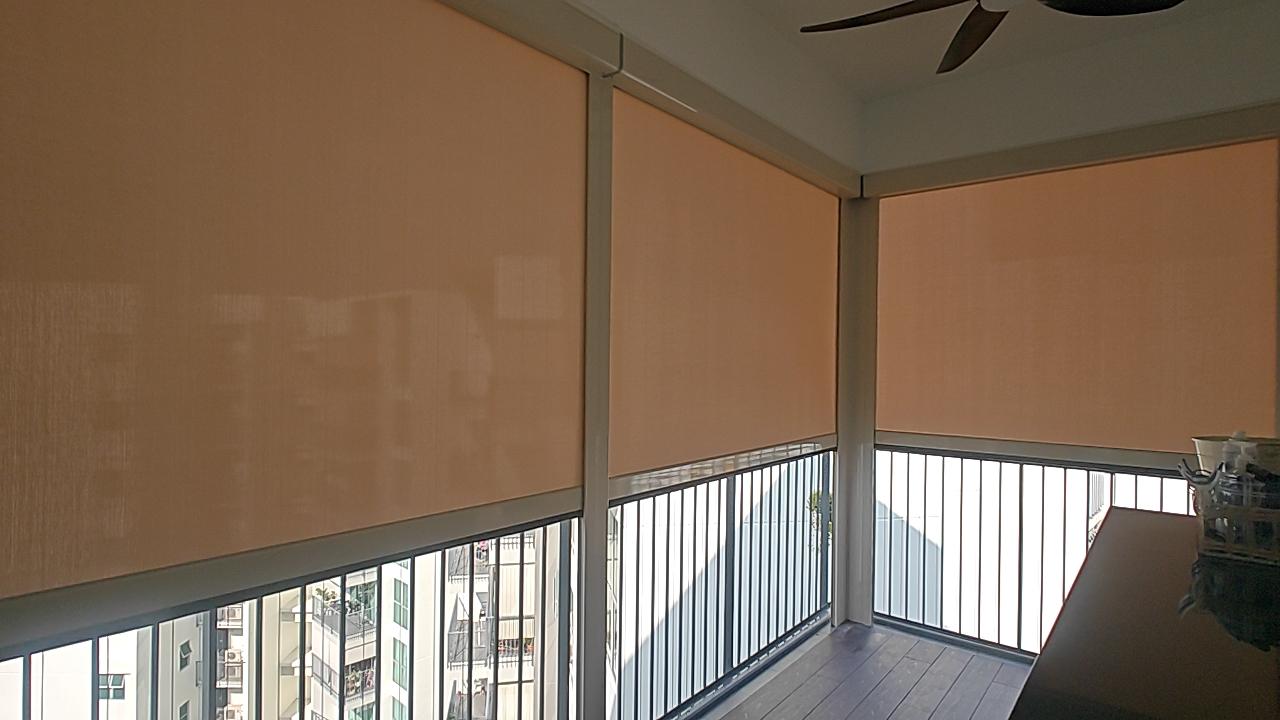
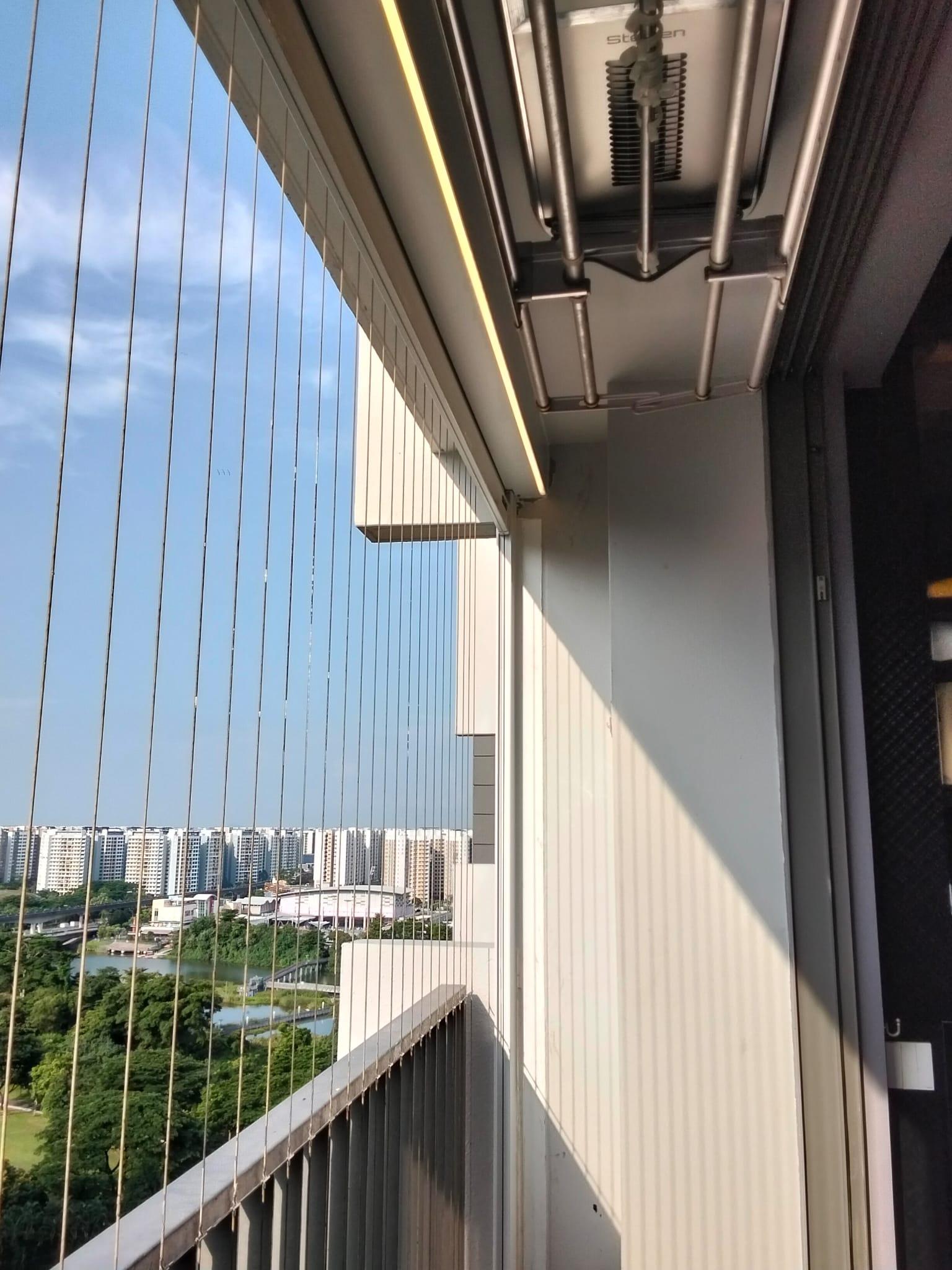
A balcony is part of the private unit, but blinds can be visible from outside and installation may involve drilling, common access or work near the façade. The MCST may therefore regulate colour, track position, headbox visibility and contractor working hours. These rules help maintain a consistent appearance and protect common property.
Do not assume that a neighbour’s installation automatically authorises the same work. Guidelines can change, and different blocks or elevations may have different conditions. Request written requirements from the management office.
Documents commonly requested
Management may ask for an application form, product details, photographs, drawings, colour samples and contractor information. Insurance documents, worker details, deposits or work permits may also be required. Ask whether electrical work for motorised blinds needs separate approval.
- Proposed panel layout and mounting position.
- Fabric colour and external appearance.
- Track and headbox colour.
- Contractor contact and insurance information.
- Installation date, duration and access plan.
Prepare a clear installation proposal
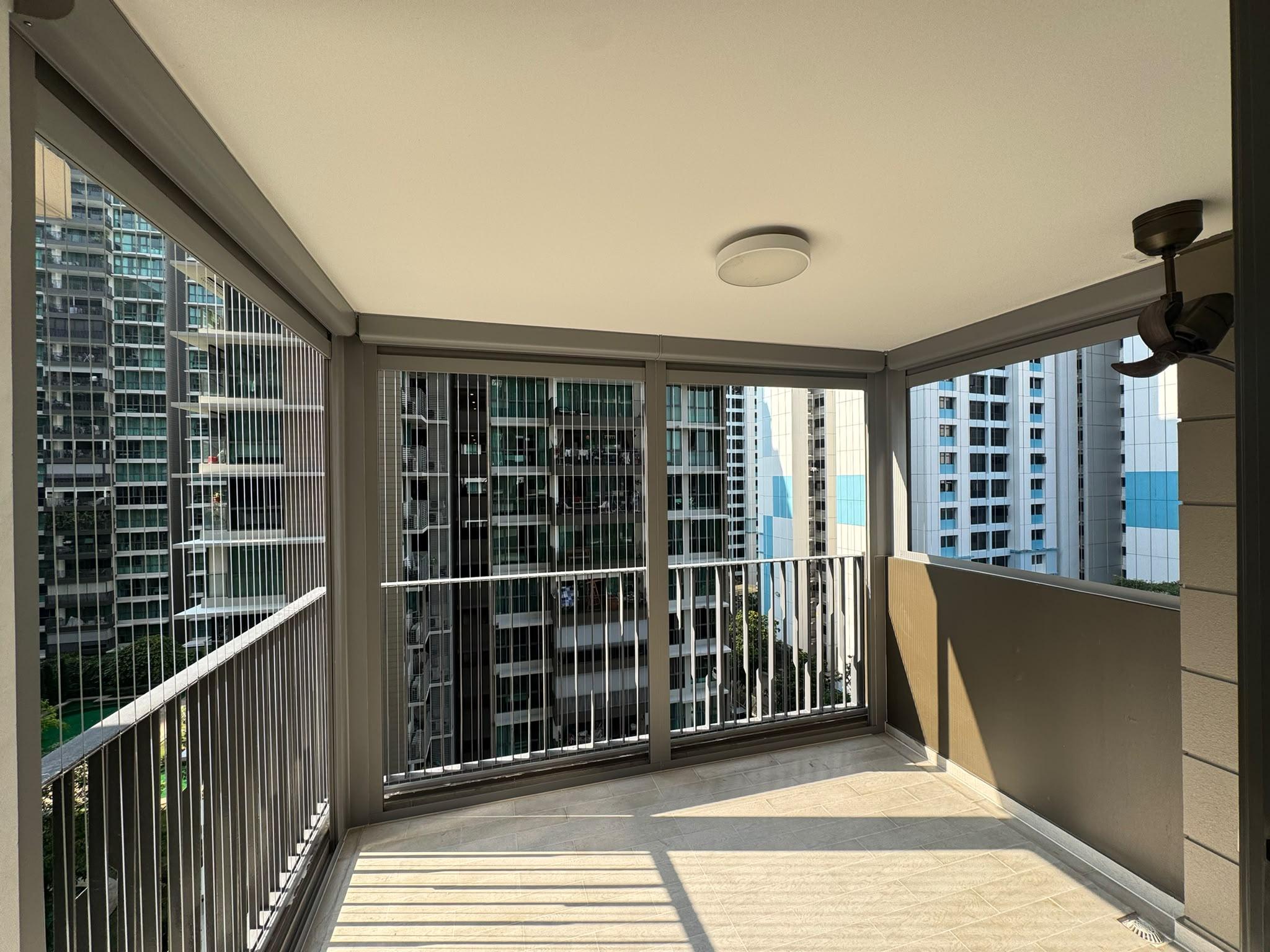
Begin with accurate site measurements and photographs showing the ceiling, walls, handrail and existing fixtures. The proposal should identify the number of panels, track locations and operating method. If management requires a standard façade colour, confirm that the selected fabric and aluminium finish comply before production.
For wide openings, the panel division should suit both the structure and the appearance. Review Higher View Ziptrack solutions when a standard system is not appropriate.
A practical approval workflow
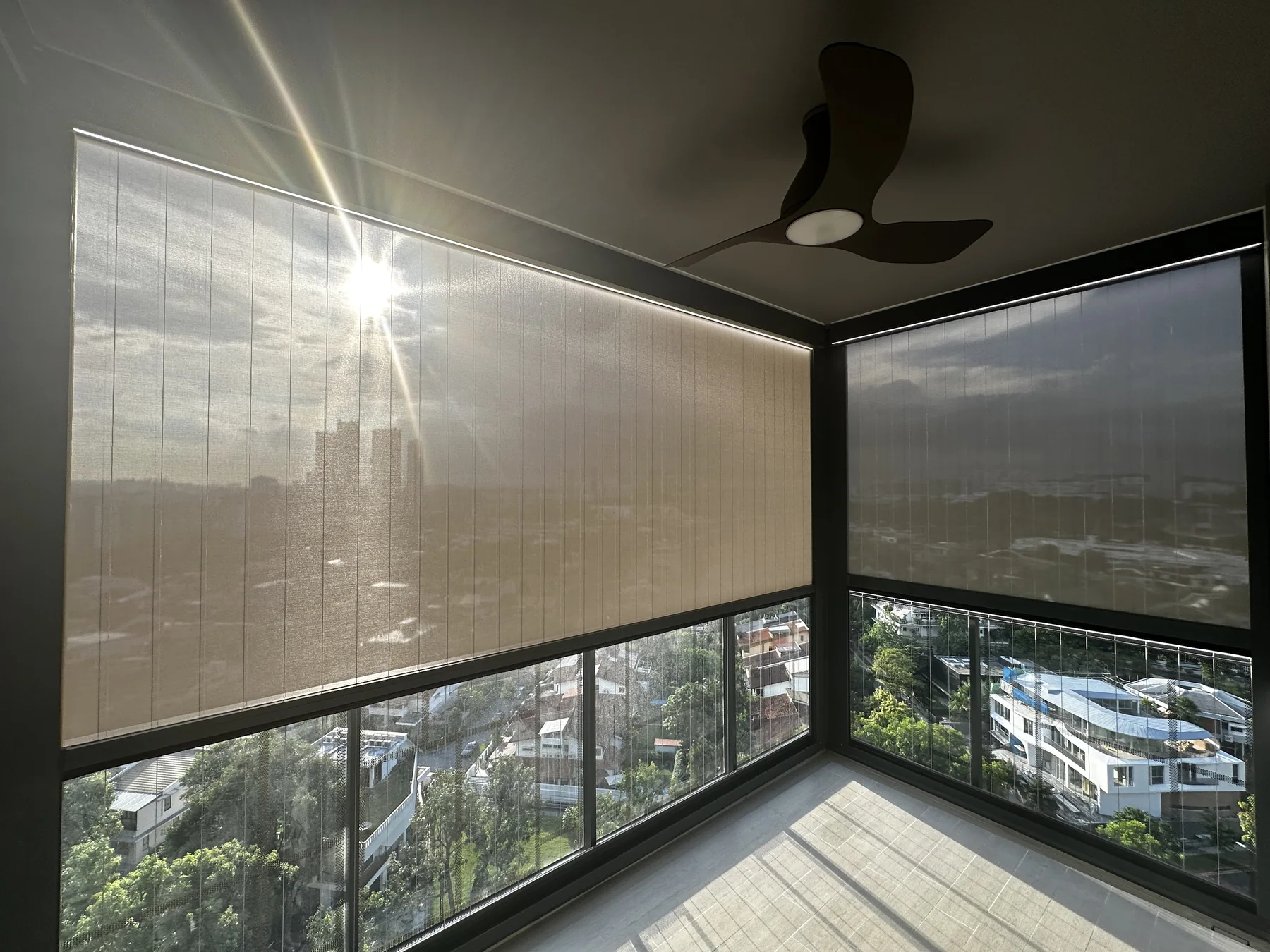
Contact the management office before requesting a final quotation and ask for the latest renovation or balcony-enclosure rules. Share these documents with the blind supplier during the site visit. The supplier can then prepare a panel layout and material proposal that reflects the development’s restrictions. Submit the complete application and wait for written approval before confirming the installation date.
If management asks for revisions, update the drawing, colours or contractor documents and resubmit them. Keep all correspondence in one place. Clear records are useful if security staff or building managers need to verify the work on installation day.
Common reasons an application is delayed
Applications are often delayed because the fabric colour is unspecified, the drawings do not show track locations, or contractor insurance documents are missing. Another common problem is arranging installation before the permit or deposit is complete. Homeowners can avoid these issues by using a checklist and confirming submission requirements with the management office.
Visible changes to the façade may receive closer review. If the proposed blind differs from existing installations, include photographs or samples that show how it will look from outside. Where a development has an approved vendor or standard specification, clarify whether alternatives are permitted.
Choosing between manual and motorised systems
Manual blinds can be practical for smaller openings and have a simpler control arrangement. Motorised blinds are convenient for wider panels and regular adjustment, but the electrical route must be considered. Compare convenience, access, panel size and maintenance rather than choosing only by initial price.
For several panels, grouped controls can simplify daily operation, while separate channels allow different parts of the balcony to be shaded independently. Confirm the control plan in the approval drawing if switches, wiring or visible components are involved.
Responsibilities after the work is completed
Follow the MCST’s rules for disposal, cleaning and removal of protective materials. Inspect common areas with the contractor if required and recover any renovation deposit according to management procedures. Report damage promptly. Inside the unit, retain final photographs and product information so future owners or service technicians understand the approved installation.
Installation-day requirements
Condominiums often restrict working hours and require protection for lifts, corridors or lobby areas. Confirm parking, loading access and service-lift booking. Clear balcony furniture and inform the installer about house rules before arrival.
The contractor should follow the approved mounting plan and avoid unauthorised changes. If site conditions differ from the proposal, pause and confirm the revised approach rather than proceeding without management knowledge.
Motorisation, controls and electrical work
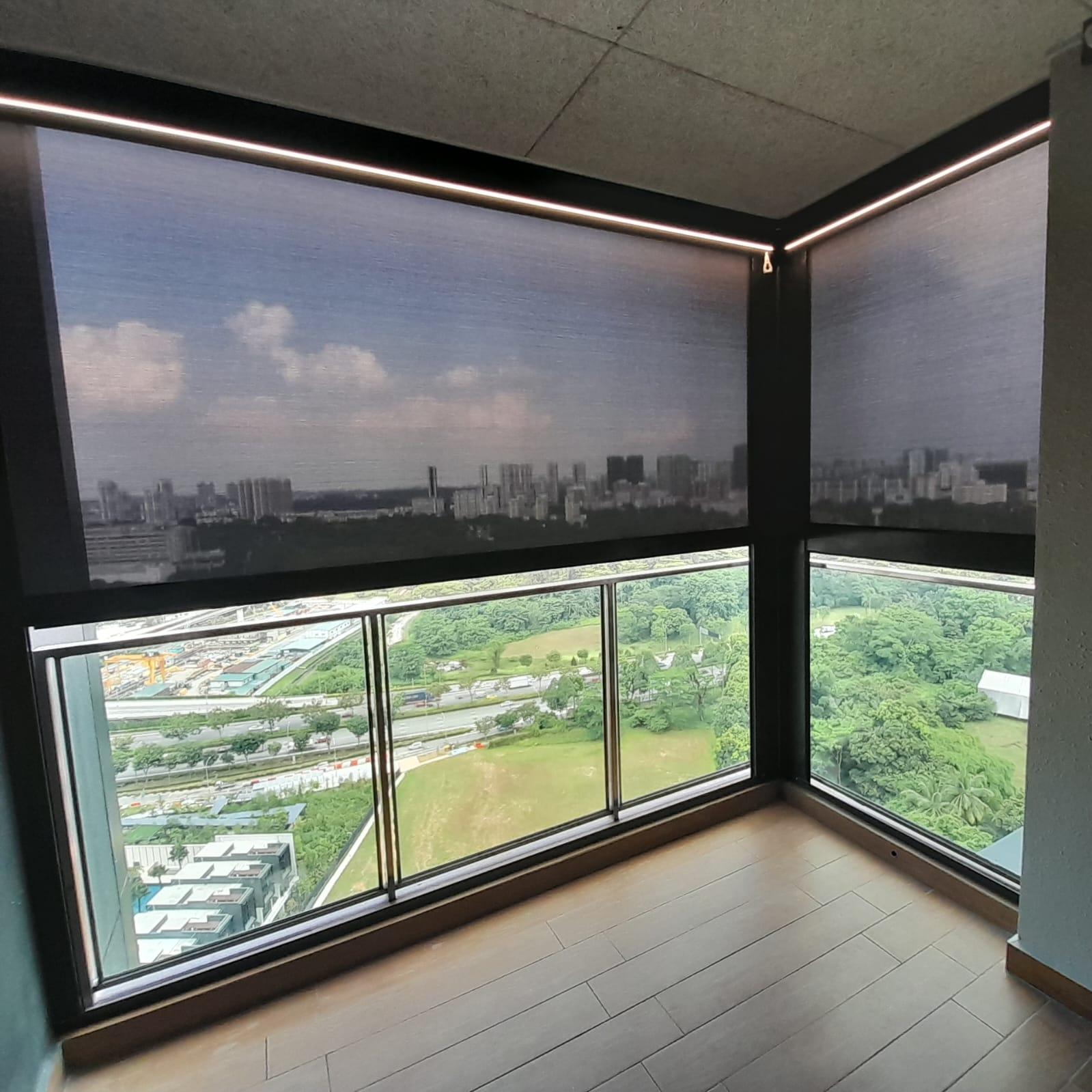
Motorisation is convenient for wide or frequently used balcony blinds. The proposal should show the power route, motor location and control arrangement. Ask whether wiring will be concealed and whether a licensed electrical worker is required. Remote, wall and grouped controls should be tested during handover.
After approval and installation
Keep the approval letter, accepted drawings and warranty documents. Test every panel, learn the severe-weather guidance and keep tracks free from debris. If fabric or components are changed later, check whether the MCST needs to approve the new colour or specification.
If insects are also a concern, review dual Zip Blinds with mesh. To prepare a site-specific proposal for MCST Approved Balcony Blinds, contact SmartZip with photographs and management requirements.