Open Daily (Including PH) 10am - 7pm
33 Ubi Ave 3, #01-30 Vertex, S408868

Zip Blind Installation Singapore: From Site Assessment to Handover

Zip Blind Installation Singapore: From Site Assessment to Handover
A successful Zip Blind Installation Singapore project begins well before drilling starts. Outdoor blinds must fit the actual opening, withstand the site’s exposure and remain easy to operate every day. Accurate measurements, suitable mounting surfaces, fabric selection and a clear installation plan all contribute to a neat and dependable result.
Begin with a detailed site assessment
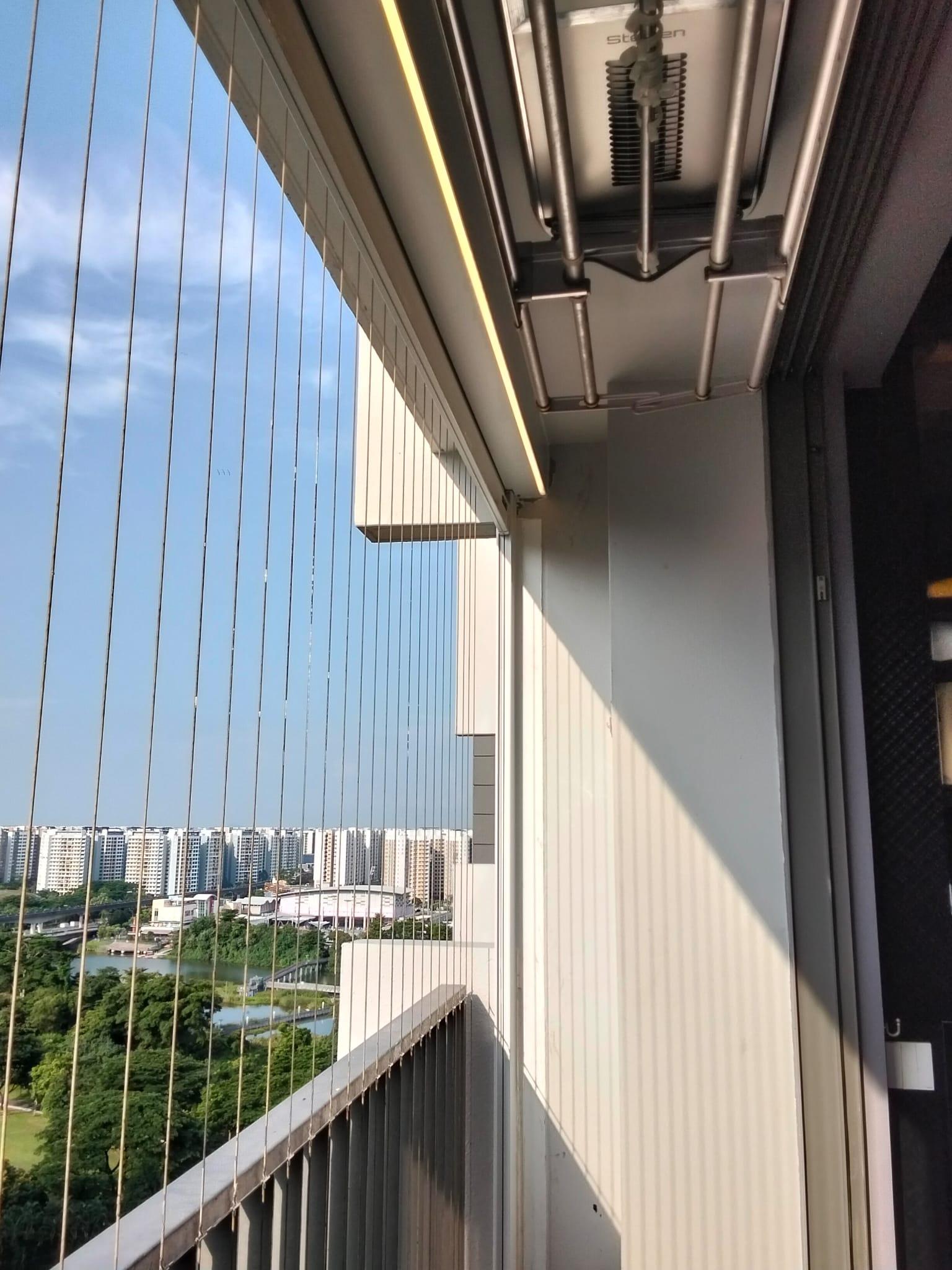
The installer should measure the usable width and height rather than relying only on floor-plan dimensions. Real balconies can include uneven walls, beams, handrails, lights, pipes, drainage points and air-conditioning equipment. These features affect the position of the headbox, side tracks and bottom bar.
Sun direction and weather exposure also matter. A sheltered balcony may need a different fabric and operating routine from a high-floor opening exposed to wind-driven rain. Photographs are useful for an initial discussion, but final production measurements should be taken on site.

Choose the right panel layout
One large blind may appear visually simple, but it is not automatically the best choice. Dividing a wide opening into two or more panels can improve flexibility, allow different areas to be shaded independently and make access easier. Structural columns or balcony zones may provide natural division points.
- Check the clear width and height of every section.
- Note doorways and frequently used access routes.
- Decide whether panels should operate together or separately.
- Confirm space for the headbox and tracks.
- Consider future cleaning and servicing access.
For substantial openings, review Higher View Ziptrack solutions before selecting a standard-size system.
Fabric and operating method
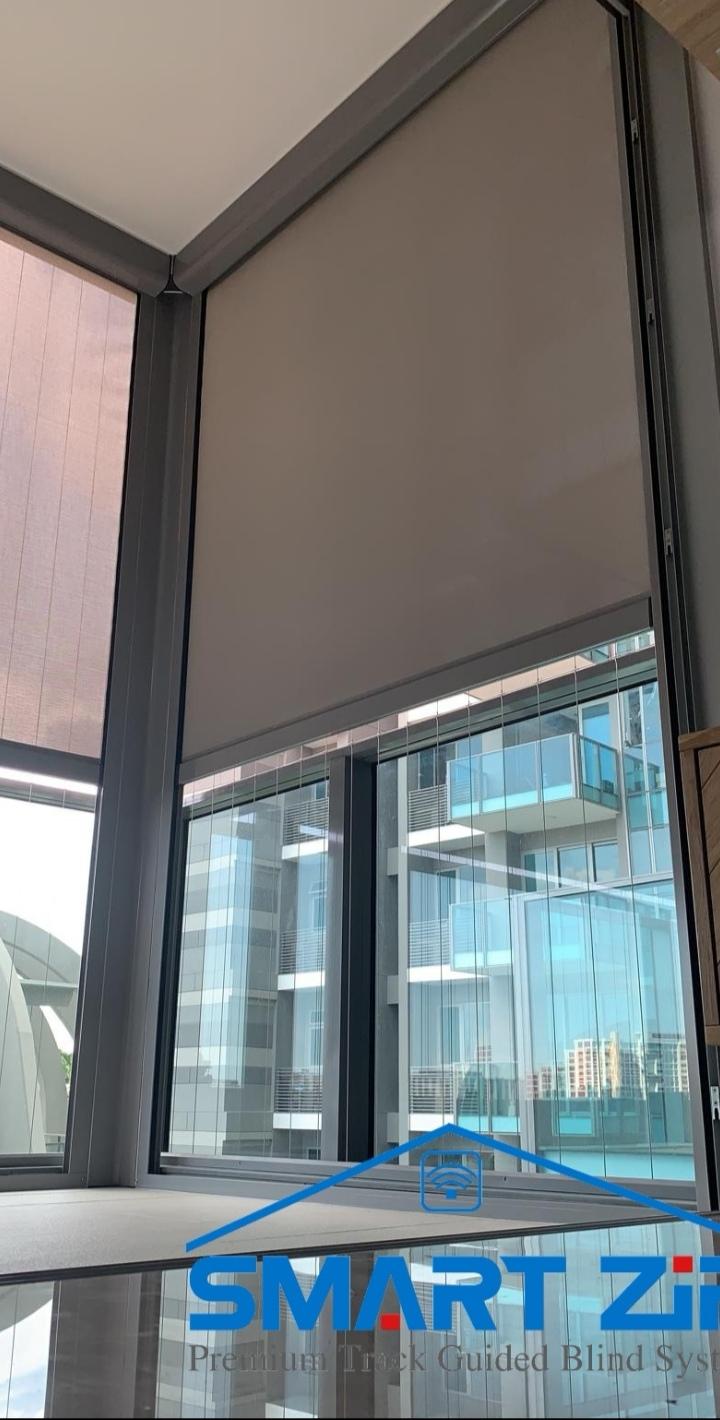
Fabric determines glare reduction, privacy and daytime visibility. An open-weave screen can soften sunlight while retaining an outward view. A denser fabric may provide stronger shade and privacy. Samples should be viewed at the actual opening because direct sun changes how colour and openness appear.
Manual operation can suit compact openings. Motorisation is useful for wider, higher or frequently adjusted blinds. If a motor is selected, plan the power route, control location and cable concealment before installation. Ask whether the system uses a remote, wall control or connected option and how manual override works.
Condo approval and installation access
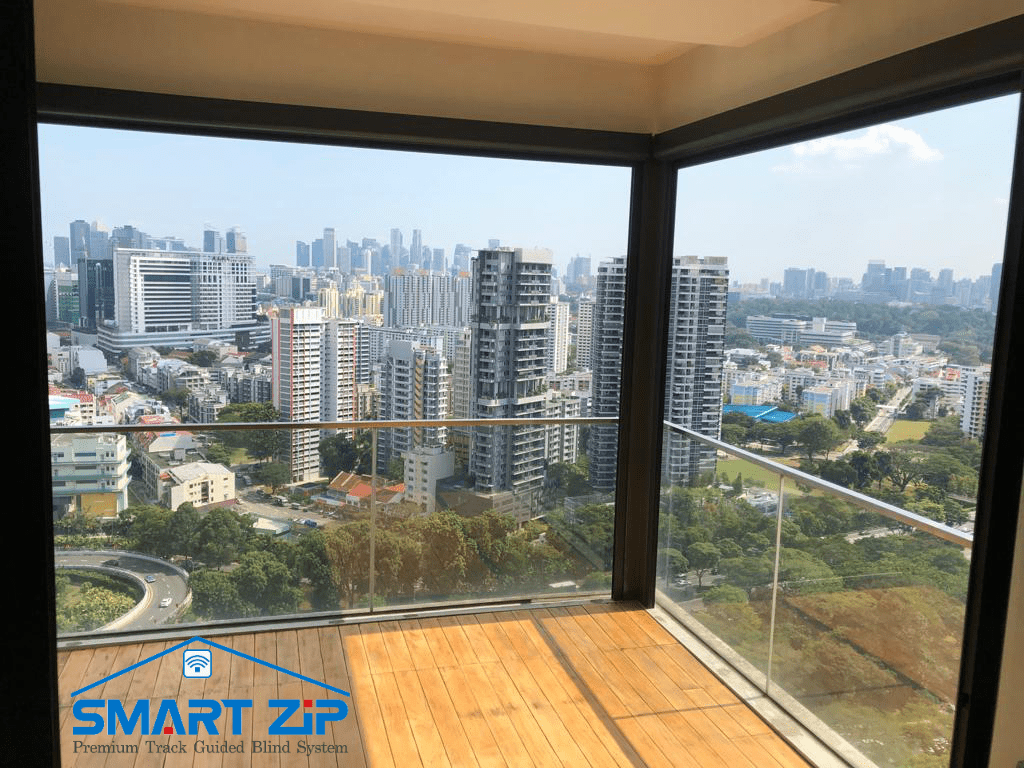
Condominium owners should check MCST requirements early. Management may specify acceptable colours, visible components, drilling locations, contractor hours and protection for common areas. The application may require product information, drawings, insurance documents or contractor details.
Before installation day, clear furniture, planters and drying racks from the work area. Confirm access to power and notify building management if loading bays or service lifts are required. Good preparation reduces delays and gives installers space to align the system accurately.
What happens during installation
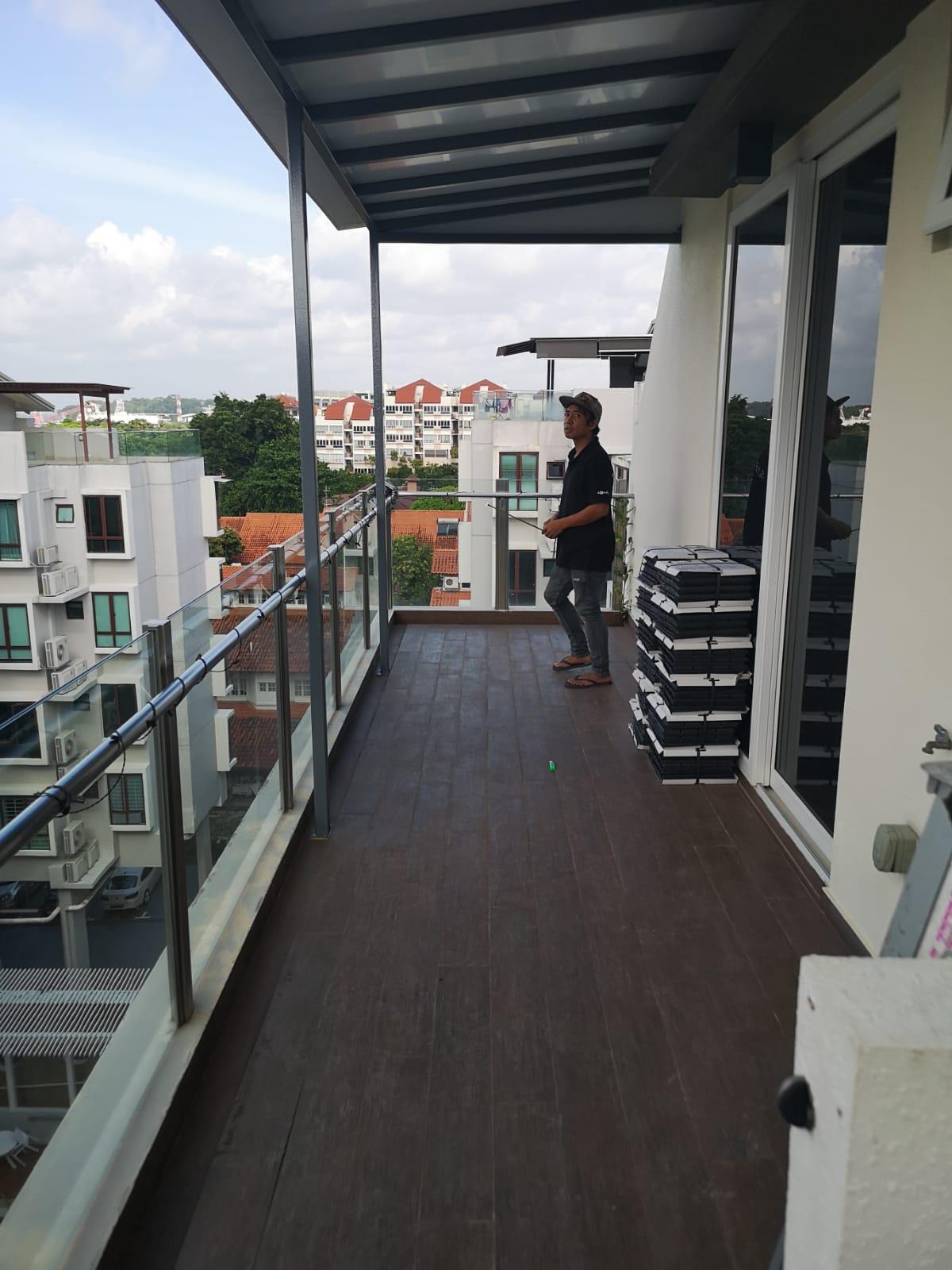
The team normally marks the fixing points, installs the headbox and aligns the side tracks. Fabric and the bottom bar are then tested through their full travel. Track alignment is important: a blind that rubs or moves unevenly should be corrected before handover rather than forced into operation.
For motorised systems, the installer sets travel limits and tests all controls. The handover should include operating instructions, cleaning advice and severe-weather guidance. Homeowners should know where the motor or receiver is located and who to contact if the blind stops responding.
Questions to confirm before approving the quotation
A clear quotation should identify the number of panels, measured dimensions, fabric range, track colour, operating method and electrical scope. Ask whether disposal of existing blinds, access equipment and touch-up work are included. For a motorised system, confirm the motor brand, control type, warranty and who is responsible for providing the nearby power point.
It is also useful to confirm the expected production period and the time required on site. Custom outdoor blinds are manufactured to measured dimensions, so changes after production begins may be difficult. Review the final panel divisions and control arrangement before giving approval.
Where several openings are involved, label each panel on the proposal so measurements and controls cannot be confused. Confirm whether all motors will use one remote, separate channels or grouped commands. This small planning step is particularly important for long balconies and commercial-style terraces. Homeowners should also photograph the completed installation and retain the final measurements, which can simplify future servicing or fabric replacement.
Handover checklist
- Operate every panel from fully open to fully closed.
- Check that bottom bars sit level.
- Confirm remote and wall-control functions.
- Receive cleaning and weather-use instructions.
- Keep warranty and service information.
Care after Zip Blind Installation Singapore
Keep side tracks free of grit, leaves and small objects. Clean the fabric gently using the recommended method and allow it to dry when practical before rolling it away. Do not operate the blind against furniture or planters. Arrange service if movement becomes noisy, uneven or slower than usual.
If you need separate shade and insect control, compare dual Zip Blinds with mesh. To arrange a site assessment, contact SmartZip with photographs and approximate measurements.