Open Daily (Including PH) 10am - 7pm
33 Ubi Ave 3, #01-30 Vertex, S408868
Condo Balcony Blinds Singapore: What to Know Before Installation

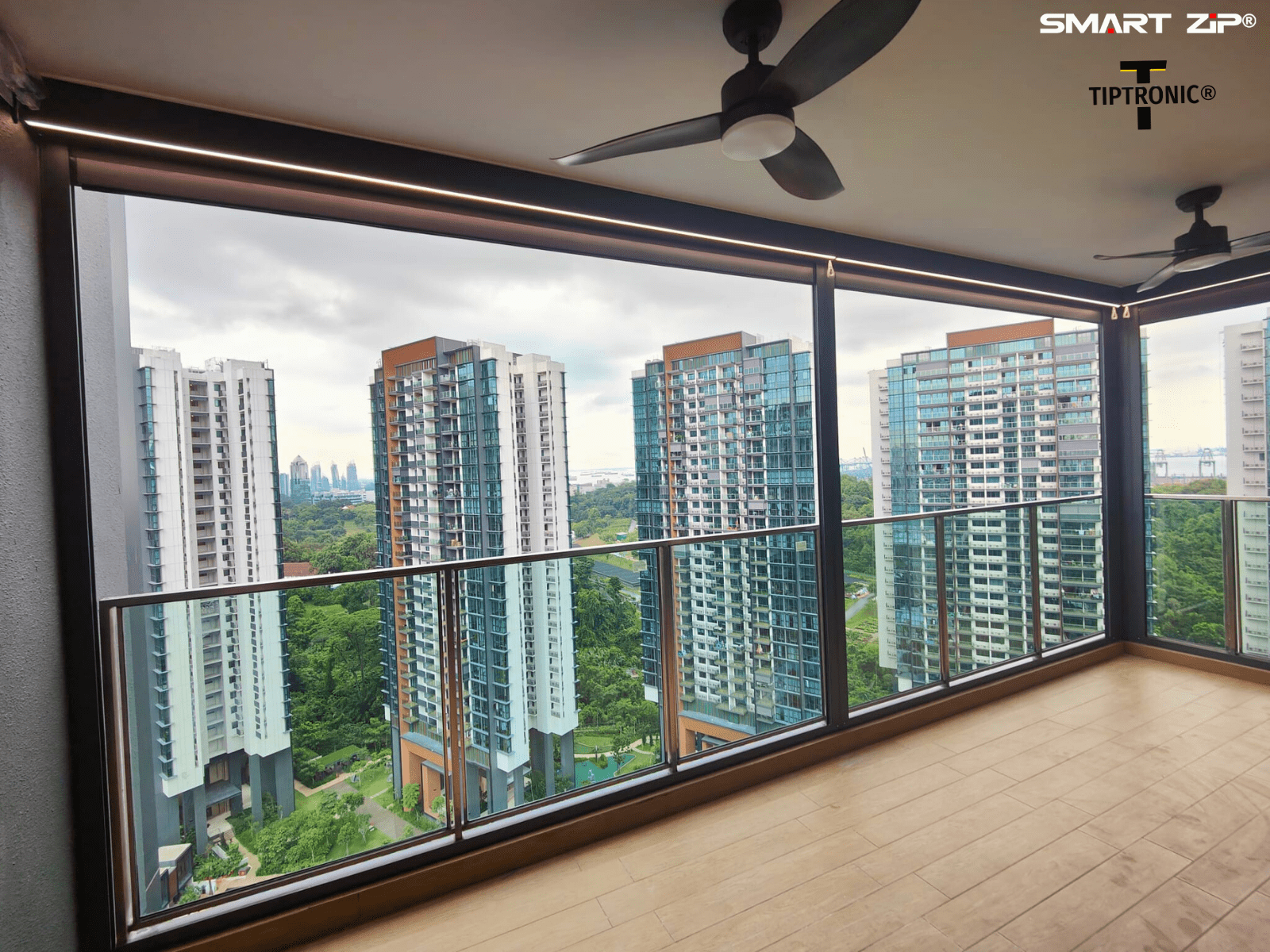
A condo balcony can be one of the most valuable spaces in a home, but strong afternoon sun, wind-driven rain, privacy concerns and insects may make it difficult to use comfortably.
The right balcony blind is not simply the cheapest blind that fits the opening. Condo owners should also consider MCST requirements, opening width, wind exposure, power supply, fabric selection and how the system will be used every day.
This guide explains the main points to check before choosing balcony blinds for a Singapore condominium.
Do You Need MCST Approval for Condo Balcony Blinds?
URA states that balconies should remain semi-outdoor spaces and should not be permanently enclosed with walls or glass panels. Retractable blinds are generally treated as furnishings and can be allowed without separate URA planning permission. However, changes that affect the external appearance of a strata development may still require permission from the condominium’s MCST.
Before confirming an installation, condo owners should:
- Check the estate’s renovation or alteration rules.
- Confirm approved frame and fabric colours.
- Ask whether drawings, product specifications or installation details are required.
- Obtain written approval before installation.
- Keep the approved documents for reference.
SmartZip can assist customers with relevant product details and communication materials. The homeowner remains responsible for submitting the application to the MCST and obtaining approval.
For a detailed document checklist and step-by-step submission process, read our MCST approval guide for condo balcony blinds.
1. Decide What You Want the Balcony Blind to Solve
Different households install balcony blinds for different reasons. Common priorities include:
- Reducing direct sunlight and glare
- Improving privacy
- Reducing exposure to rain
- Making the balcony more usable
- Reducing insects while maintaining airflow
- Protecting outdoor furniture
- Creating a more comfortable space for children or pets
Your main priority affects the choice of system and fabric. A homeowner who mainly wants privacy may need a different configuration from someone who wants ventilation and insect protection.
2. Choose the Right SmartZip System
SmartZip Flagship
Flagship is the standard motorised solution for most residential balconies. It uses a Dooya motor and includes features such as smartphone control, an auto-balancing system, a weighted bottom bar and a rain-guard design.
It is generally suitable for homeowners who want a straightforward motorised Zipblind without additional lighting or manual-backup features.
SmartZip Tiptronic
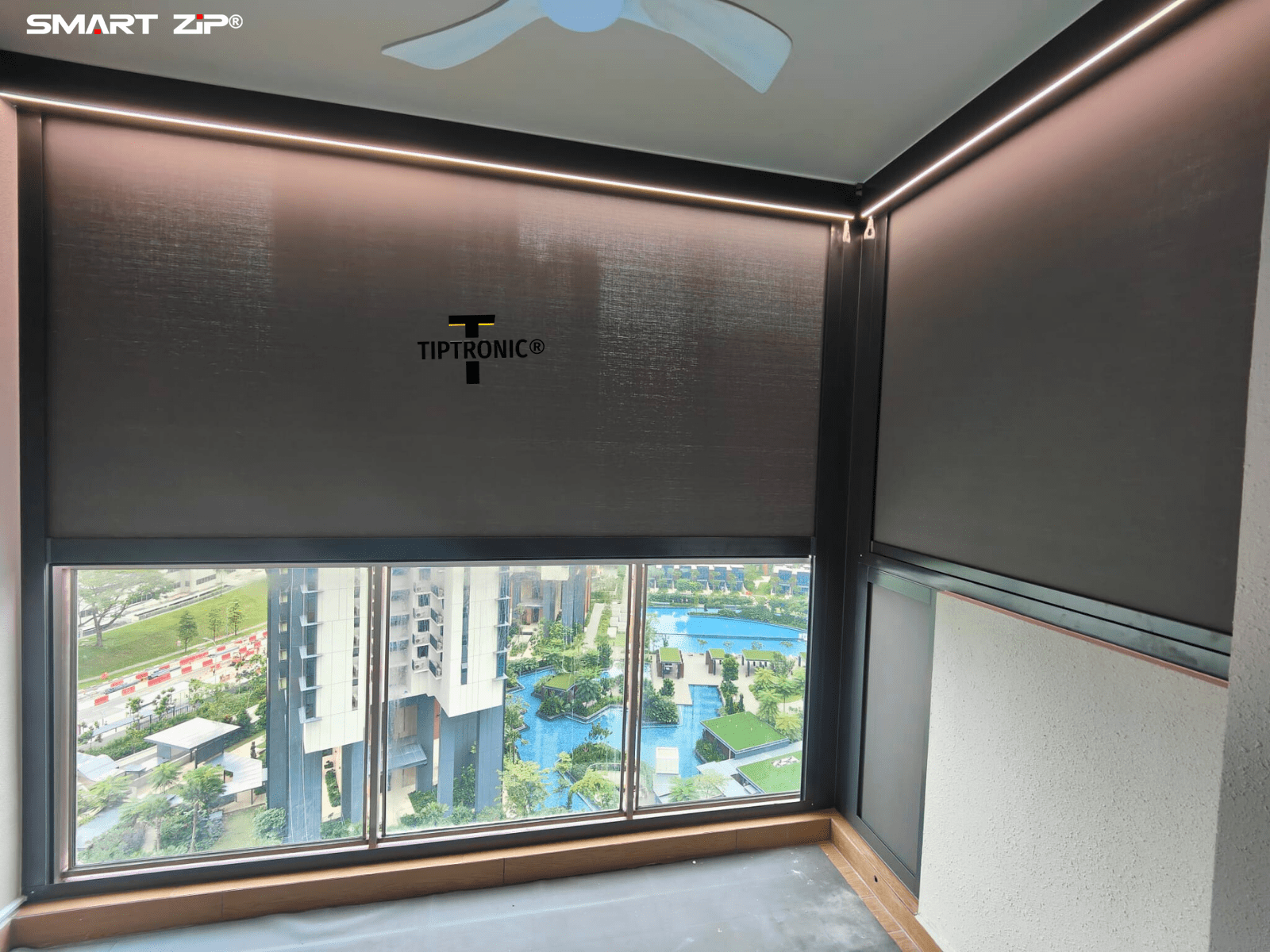
Tiptronic uses the same core motor and fabric system as Flagship, but adds:
- Built-in LED lighting
- A manual hand crank
- Motorised and manual operation
This makes it suitable for homeowners who want ambient balcony lighting or the ability to operate the blind manually if electrical operation is temporarily unavailable.
SmartZip Megaview ECO
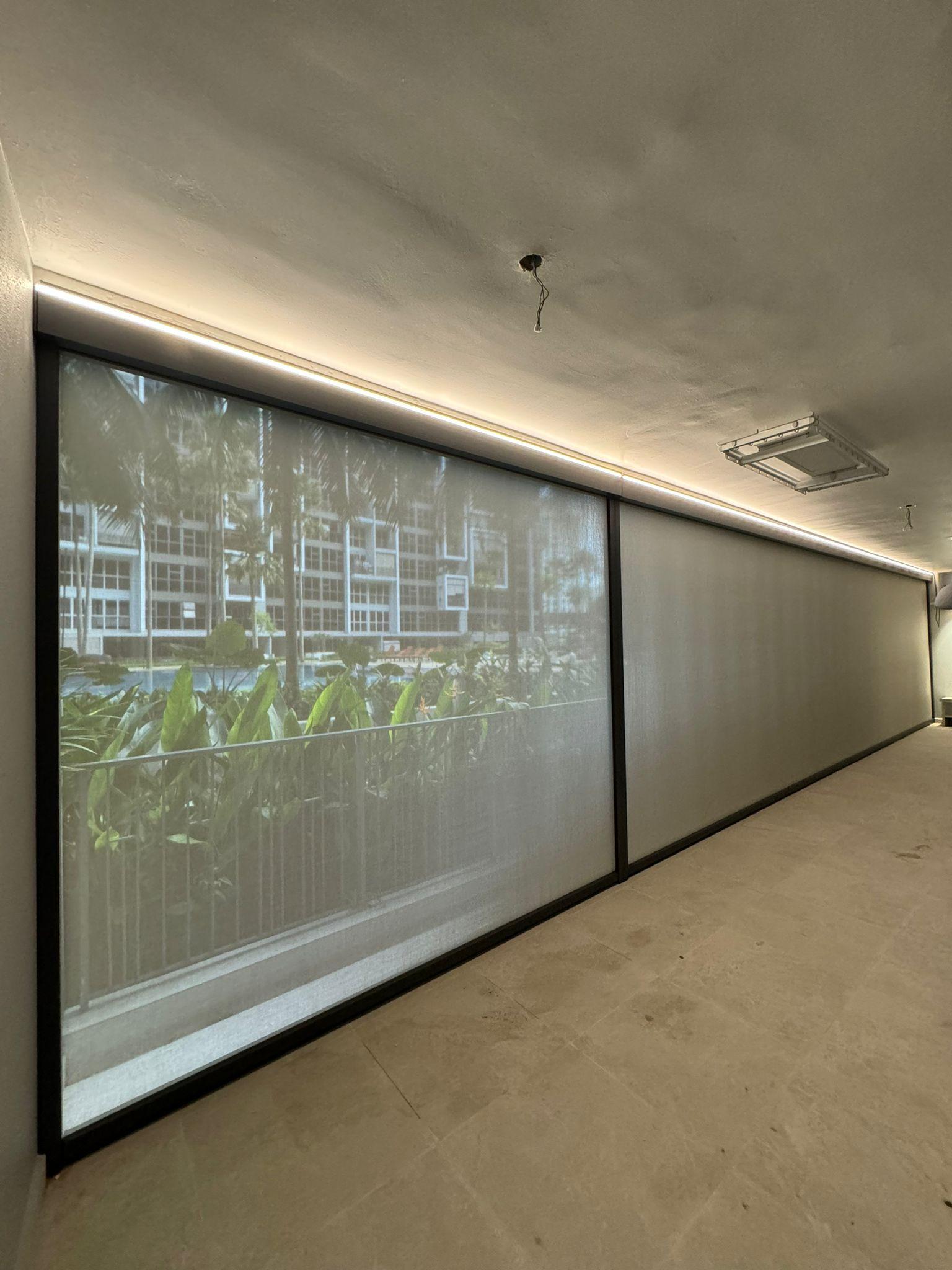
Megaview ECO is intended for wider openings where homeowners want a clearer view with fewer intermediate posts. It uses an upgraded motor while retaining the same fabric system used in the mainstream range.
It can be installed in condos as well as landed and commercial properties, and the price difference from a standard system may not be large for a suitable project.
For exceptionally wide openings, SmartZip also offers the Megaview system, subject to site conditions and engineering assessment.
Dual Zipblind with Mesh
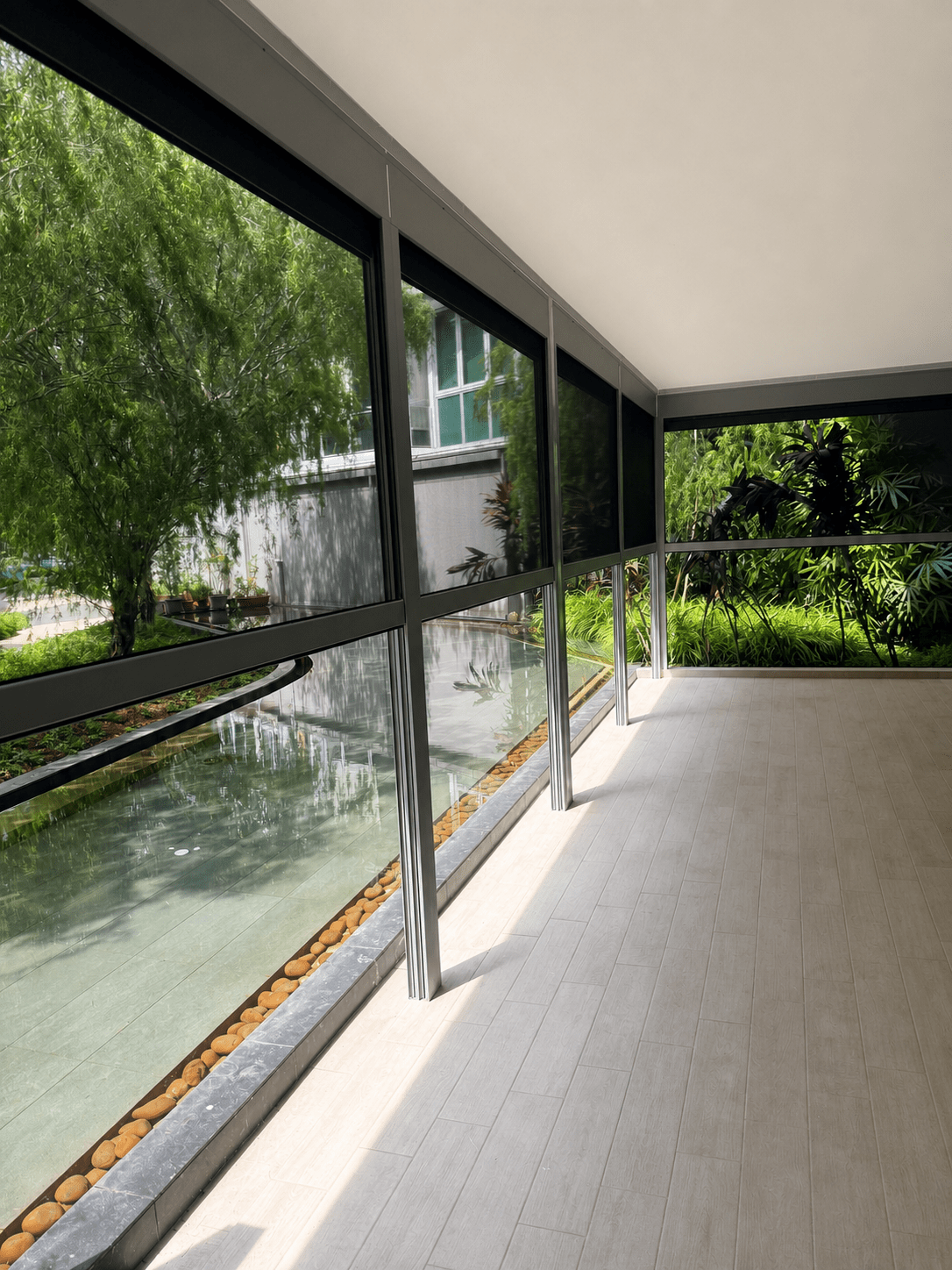
Dual Zipblind with Mesh uses two independently motorised layers:
- An outer shading and privacy layer
- An inner insect-mesh layer
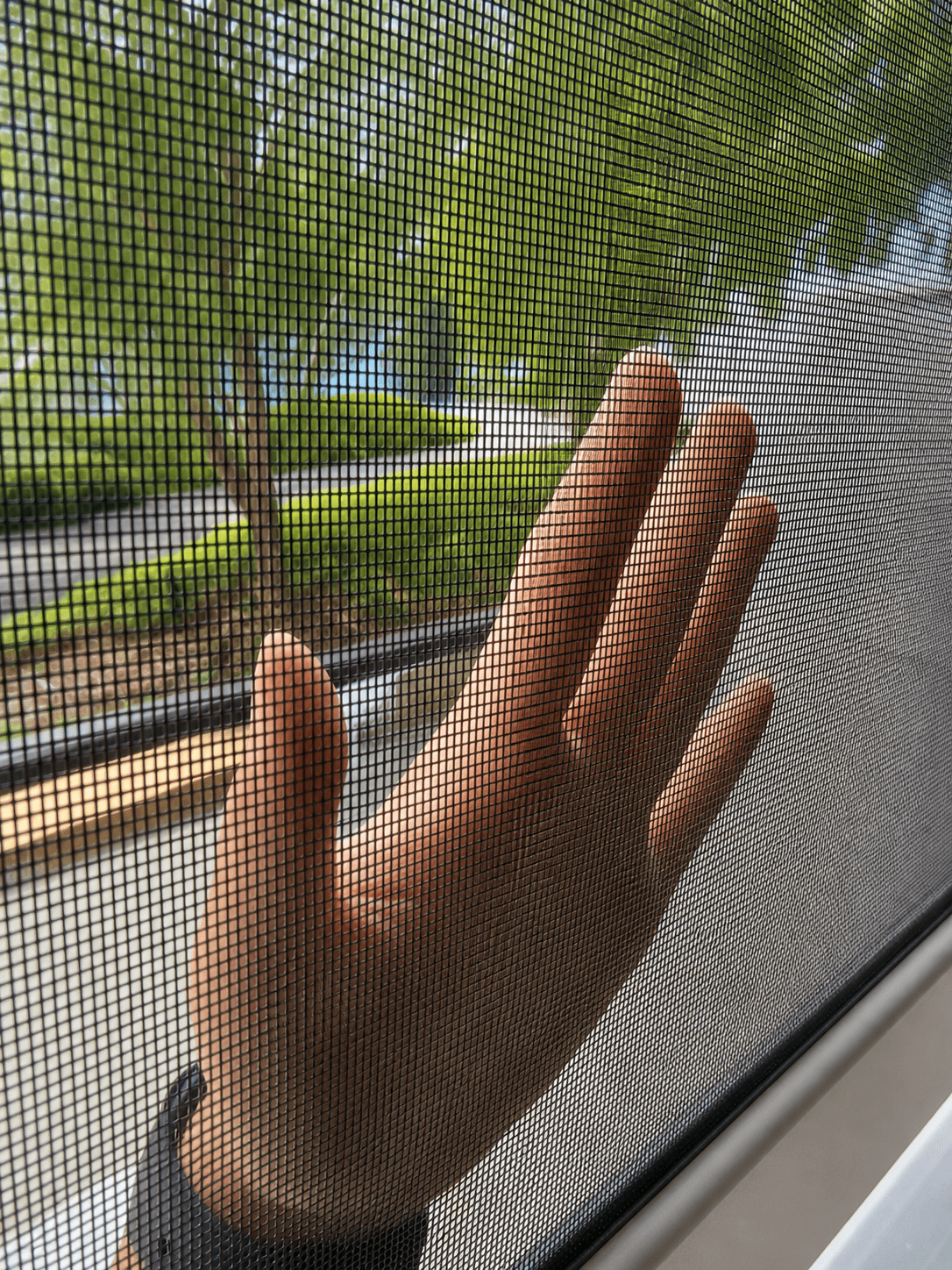
The mesh layer allows homeowners to maintain airflow while reducing insects, while the outer layer provides stronger shading and privacy when required.
This system is particularly relevant for families who use their balcony frequently and do not want to choose between ventilation and insect protection.
3. Check the Balcony Width, Height and Shape
Before choosing a product, the opening should be measured properly. Important factors include:
- Total opening width
- Opening height
- Number of panels
- Corners or L-shaped layouts
- Existing ceiling structures
- Available mounting surfaces
- Lift and access restrictions
- Whether intermediate posts are acceptable
A standard solution may be suitable for a conventional opening, while a wider balcony may benefit from Megaview ECO or Megaview.
The product should be selected according to the actual opening and installation conditions—not simply according to the advertised maximum size.
4. Ask for Evidence Behind Wind-Resistance Claims
High-floor condo balconies can experience stronger and less predictable wind conditions.
When comparing suppliers, do not rely only on phrases such as “strong wind resistant.” Ask:
- Was the system formally tested?
- Which product and configuration were tested?
- What opening size was used?
- What installation conditions applied?
- Can the test report be shown?
- Does the result apply to your proposed configuration?
SmartZip has formal test documentation supporting wind resistance of up to 140 km/h for the tested system and conditions. The applicable product, dimensions and installation requirements should still be confirmed for each project.
This is more useful than treating one wind-speed figure as a guarantee for every balcony and every system.
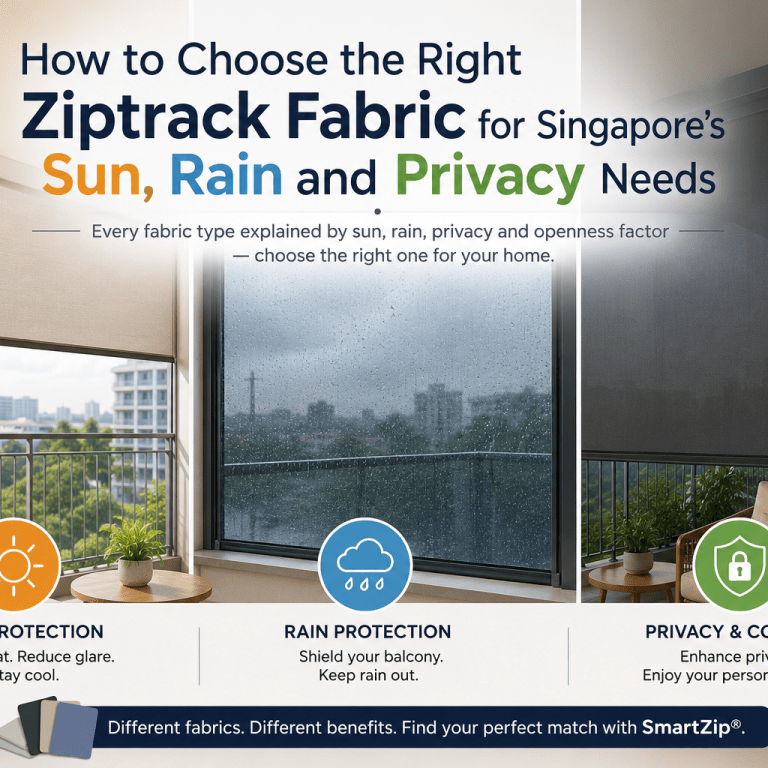
5. Choose Fabric According to Privacy, Light and View

Fabric selection affects more than colour. Customers should consider:
- Daytime privacy
- Night-time privacy
- Visibility from inside
- Natural light
- Heat and glare
- Airflow
- Exposure to rain
- Maintenance
- Fire-performance documentation where required
SmartZip uses Phifer fabric options and has supporting product documentation available. The right fabric should be selected according to the balcony’s orientation and the homeowner’s priorities, rather than choosing only by appearance.
A west-facing balcony may prioritise glare and heat control, while a balcony with an open view may prioritise outward visibility.
6. Plan the Power Supply Before Installation
Motorised blinds require an appropriate power arrangement. Before renovation or installation, confirm:
- Whether a nearby power point is available
- Whether concealed wiring is possible
- Whether surface wiring is acceptable
- Where switches or control modules will be positioned
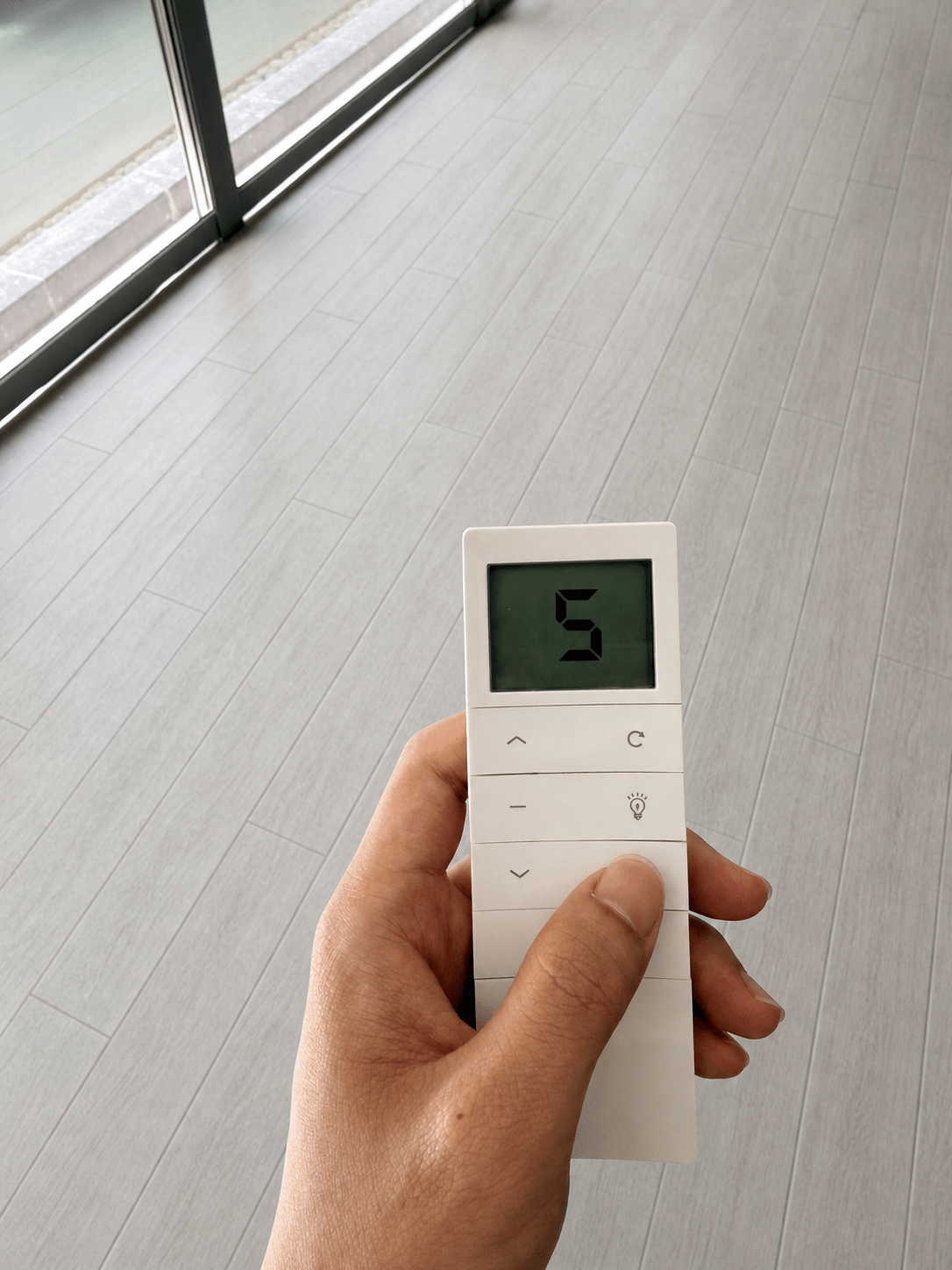
- Whether smartphone or remote control is required
- Whether a manual-backup option is preferred
For completed homes where additional wiring is difficult, a solar-powered option may be considered after a site assessment.
7. Check Invisible Grilles, Decking and Existing Structures
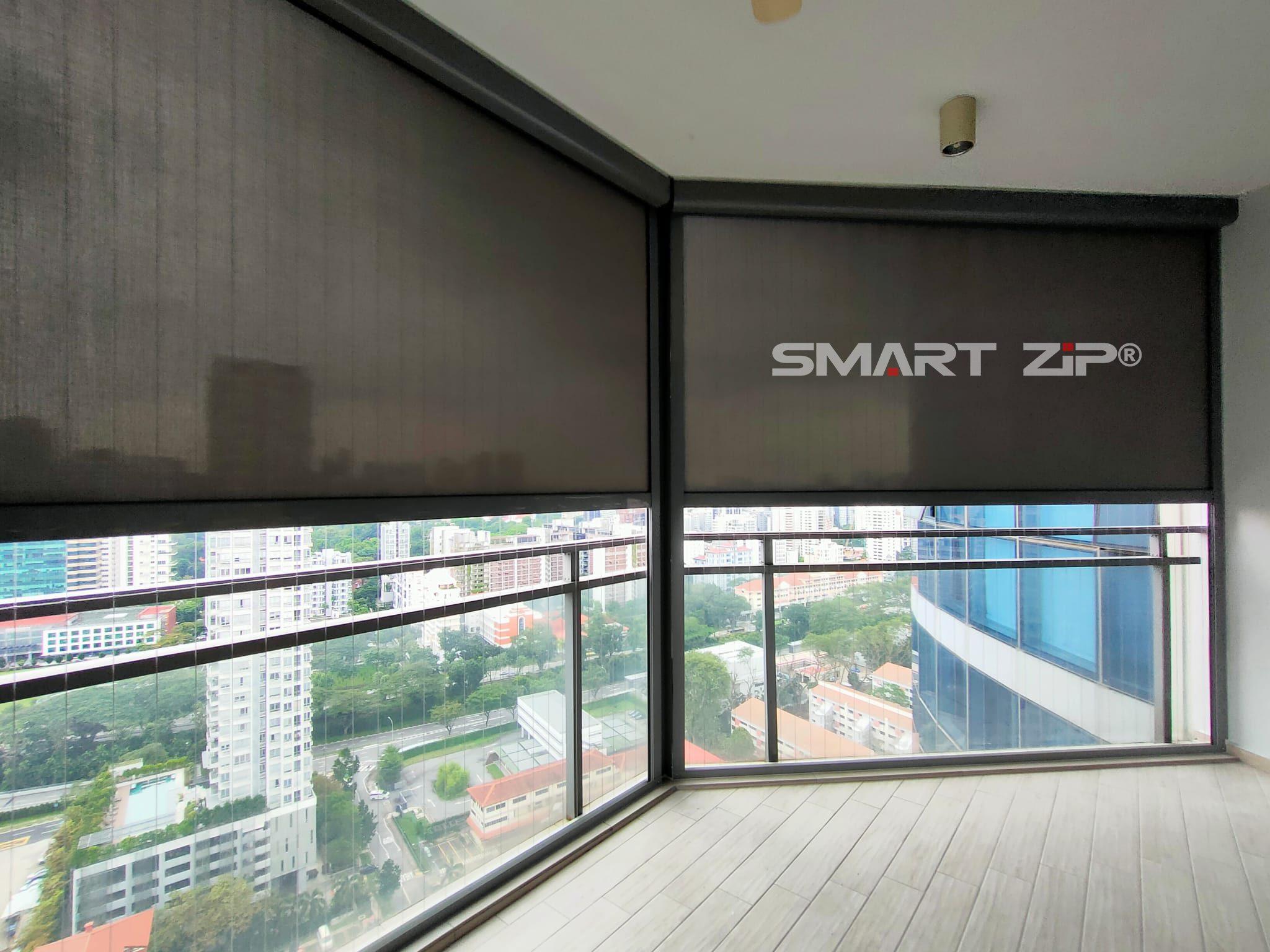
Existing balcony features can affect installation. Customers should inform the installer about:
- Invisible grilles
- Balcony decking
- False ceilings
- Lighting tracks
- Ceiling fans
- Existing blinds
- Drainage points
- Railings and parapets
- Air-conditioning equipment
These details may change the mounting position, available clearance and installation sequence.
Sending clear photos before a site visit can help the consultant identify obvious constraints earlier.
8. Understand What Affects the Price
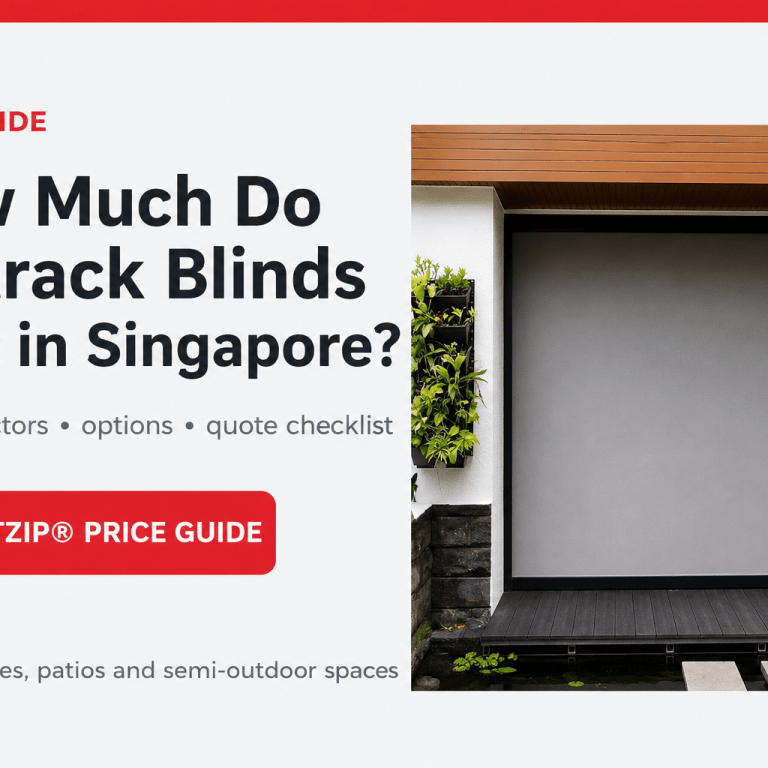
The cost of custom balcony blinds is influenced by more than floor area. For a clearer budgeting overview, read our Ziptrack Blinds Singapore Price Guide. Common price factors include:
- Width and height
- Number of panels
- Product system
- Motor brand
- Manual, motorised or solar operation
- Fabric selection
- Remote and smart controls
- Electrical work
- Installation complexity
- Access conditions
- Additional features such as LED lighting or mesh
A very low advertised price may apply only to a small standard configuration. Customers should compare quotations based on equivalent dimensions, products, motors, fabric and warranty coverage.
9. Compare Warranty Coverage Clearly
SmartZip’s current warranty structure is:
- Eight-year warranty for the motor
- Five-year warranty for other system components
These two periods should be stated separately. A general phrase such as “eight-year warranty” may incorrectly suggest that every component receives the same coverage.
Customers should also confirm what is included, what is excluded, whether labour or transport charges apply, how service requests are submitted and whether maintenance requirements affect coverage.
What to Send SmartZip for an Initial Recommendation
For a more useful WhatsApp consultation, prepare:
- Condo or development name
- Balcony photos
- Approximate width and height
- Floor level
- Main direction of sunlight
- Existing invisible grille or decking
- Available power point
- Preferred operation type
- MCST approval status
- Main concern: sun, rain, privacy, insects or wide opening
This allows the team to recommend a more relevant system before arranging detailed measurement.
Frequently Asked Questions
Are balcony blinds allowed in Singapore condos?
Retractable blinds may generally be treated as balcony furnishings under URA guidelines, but the condominium’s MCST may still require approval where the installation affects the building’s external appearance. Always check the estate’s specific rules and obtain written approval where required.
Which SmartZip system is best for a normal condo balcony?
Flagship is the standard motorised option for many conventional openings. Tiptronic adds LED lighting and manual backup, while Megaview ECO is suitable where a wider, clearer opening is preferred.
Can balcony blinds be installed with invisible grilles?
It may be possible, but the exact arrangement depends on grille position, mounting clearance and the balcony structure. Photos and a site assessment are recommended.
Is a motorised or manual blind better?
Motorised systems are generally more convenient for frequent use and larger openings. Manual systems may suit smaller openings, lighter usage or locations where wiring is inconvenient.
Can SmartZip help with MCST documents?
SmartZip can assist with relevant product details and communication materials, but the homeowner must submit the application and obtain approval from the MCST.
How do I get a quotation?
Send SmartZip your balcony photos, approximate measurements, development name and preferred system through WhatsApp. A final quotation remains subject to proper measurement, product configuration and installation conditions.
Get a Recommendation for Your Condo Balcony
Every balcony is different. Opening size, wind exposure, MCST rules, power supply and existing structures all affect the most suitable solution.
Send SmartZip your balcony photos and approximate dimensions through WhatsApp to receive an initial product recommendation.
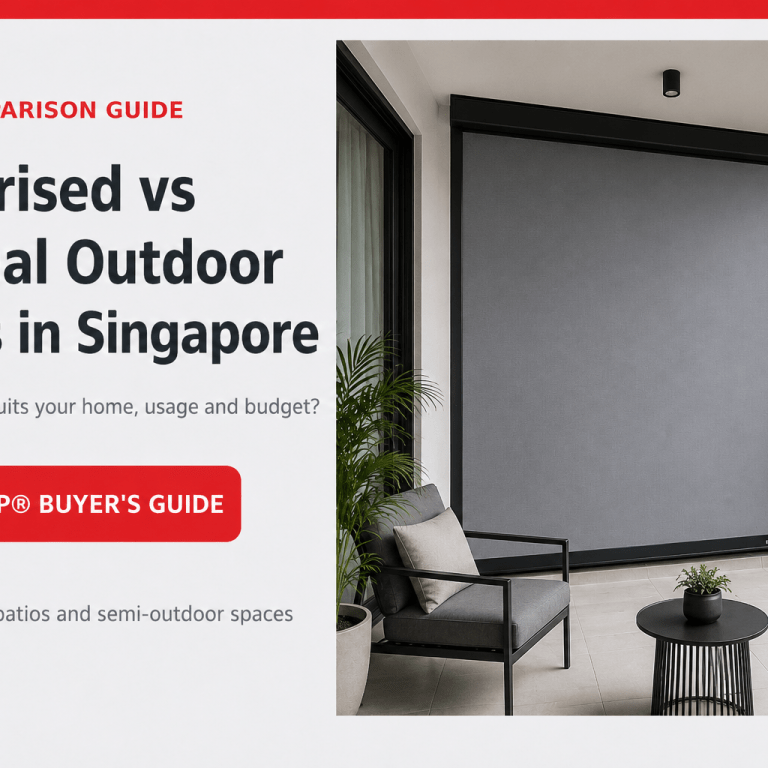
After checking MCST and installation requirements, use our SmartZip condo system comparison to choose between Flagship, Tiptronic, Megaview ECO and Dual Zipblind with Mesh.