Open Daily (Including PH) 10am - 7pm
33 Ubi Ave 3, #01-30 Vertex, S408868
Why 1% Openness Fabric Is the Most Popular Choice for Ziptrack Blinds in Singapore

For many Singapore homeowners choosing Ziptrack-style outdoor blinds, the question is not simply whether to choose a screen fabric. It is whether 1%, 3% or 5% openness is the right practical balance for the balcony. In SmartZip’s customer and project experience, approximately 99% of customers who compare these three options choose 1% openness. That is not an industry statistic; it reflects the choices customers make after considering sun, privacy, rain exposure and the view from their own home.
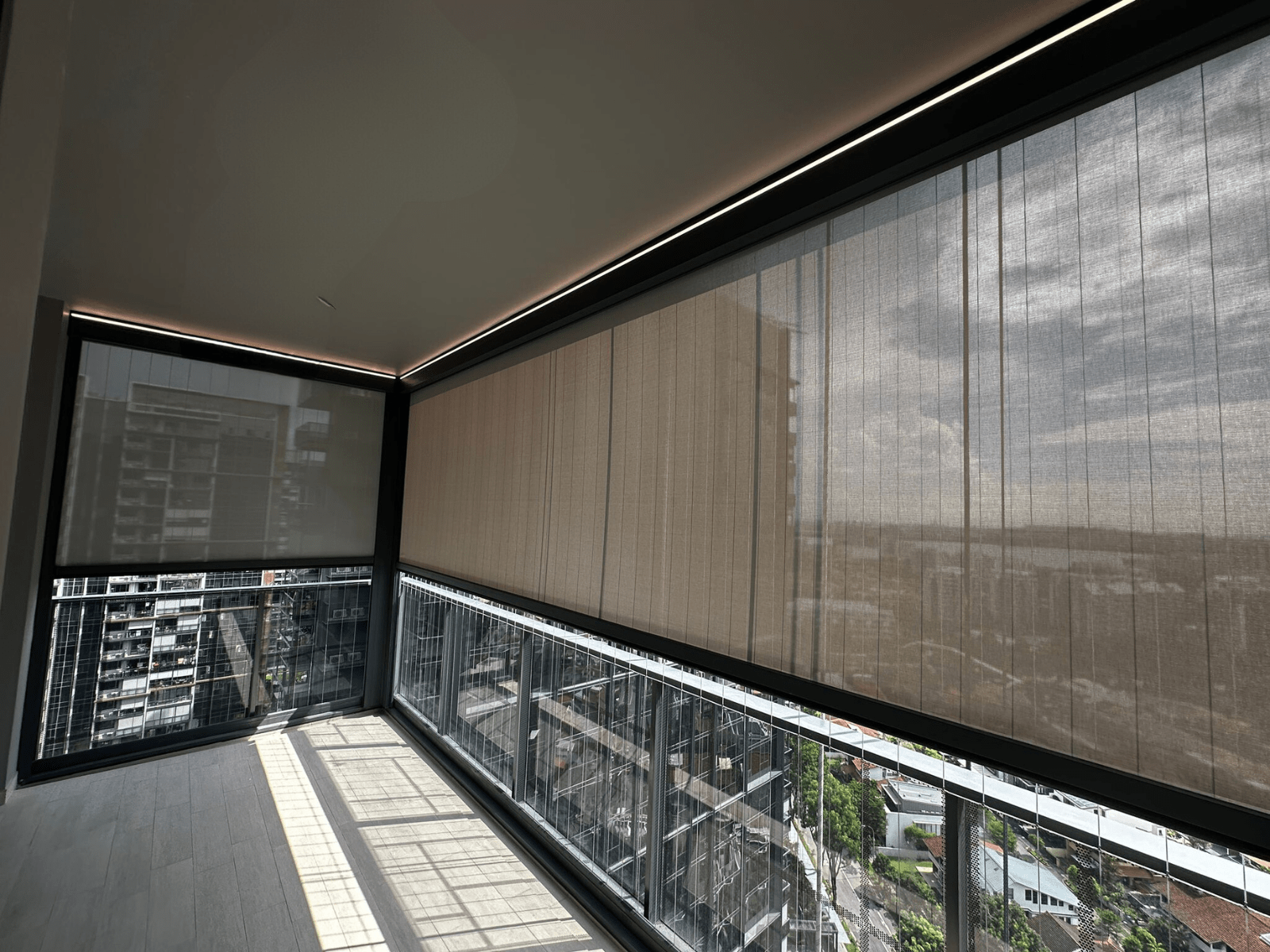
That preference makes sense in Singapore. A balcony can be bright, exposed and overlooked at the same time. Most people still want to see greenery, the skyline or the neighbourhood, but they also want a more comfortable space for dining, working, relaxing or keeping outdoor furniture. A 1% openness fabric is often the middle ground: it keeps a connection to the view while offering a denser screen than 3% or 5% options.
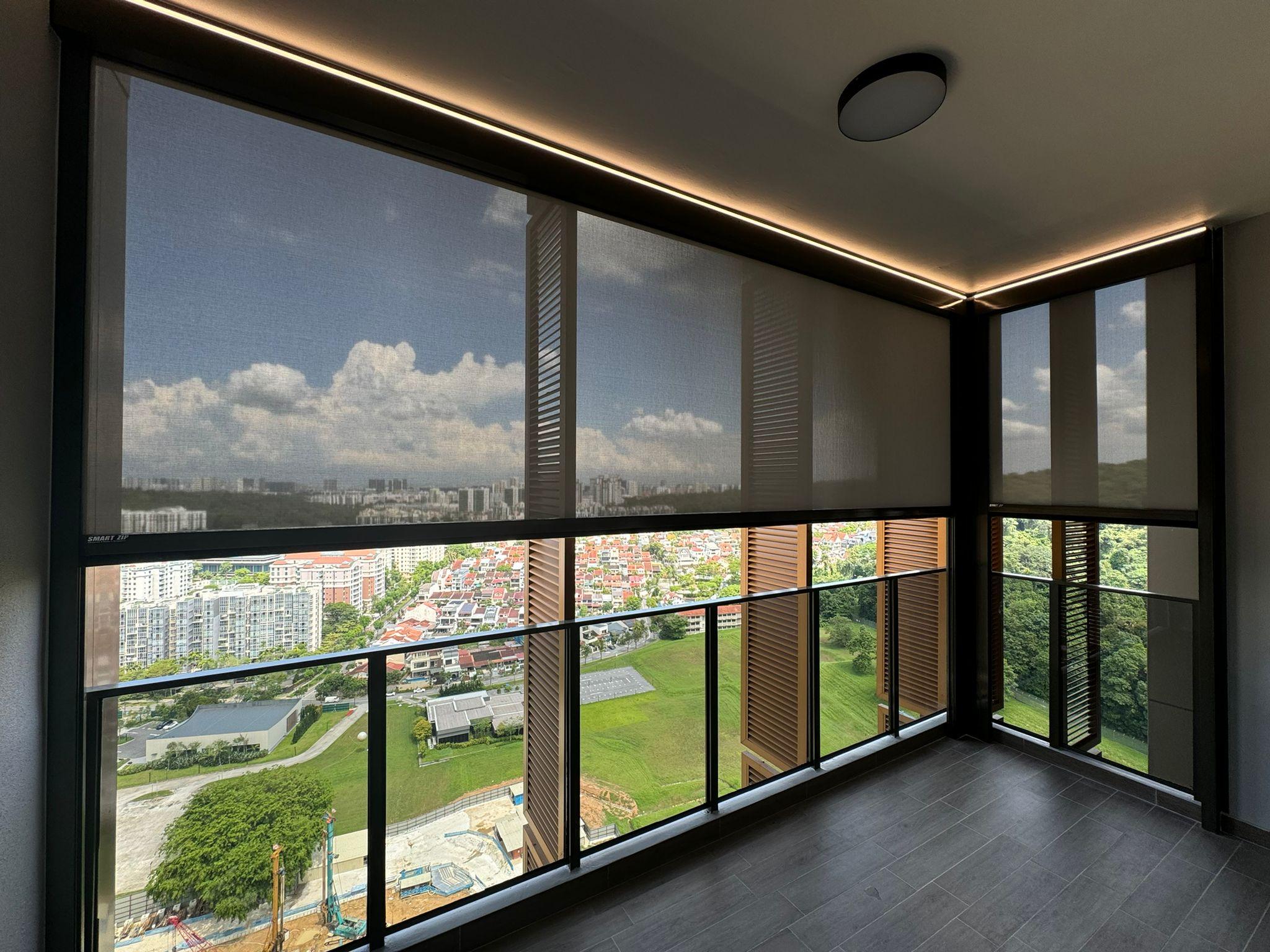
What does 1% openness mean?
Openness refers to the open area built into a screen fabric. In simple terms, a lower openness number means a denser weave; a higher number means more open space in the fabric. The number is useful when comparing fabrics in the same range, but it is not a direct promise that exactly that percentage of light will pass into a room. Fabric colour, yarn, coating, the direction of the sun, the surrounding buildings and the angle of the blind all change how bright, private and open a balcony feels.
For this reason, SmartZip discussions should start with how the balcony is used rather than with a number alone. A family may prioritise daytime privacy from nearby blocks. Another homeowner may want to soften glare at a desk while retaining the view. A third may be concerned about wind-driven rain. In these cases, 1% fabric is commonly considered because it is denser than 3% and 5% while remaining a screen fabric rather than an opaque wall.
Important: 1% openness should not be described as fully waterproof, fully rainproof, fully sealed or guaranteed to keep all rain out. A guided blind can reduce exposure to wind-driven rain, but results depend on wind direction, rainfall intensity, balcony structure, installation details, fabric selection and how fully the blind is lowered.
Why 1% is the popular practical choice in Singapore
Singapore’s weather often asks a balcony system to do several jobs at once. Strong sun can create glare and heat; close neighbouring units can reduce privacy; sudden showers can leave a seating area exposed. A denser screen can make the space feel more usable without removing the outdoor character of the balcony altogether.
Compared with more open screen fabrics, 1% is usually the option customers explore when privacy and sun control are important but an open view still matters. From inside, the fabric can soften the outside view rather than eliminate it. From outside, it can make the interior less exposed during the day, although privacy always changes with lighting conditions. At night, interior lights can reverse that relationship, so a site assessment and a fabric sample are more reliable than a universal promise.
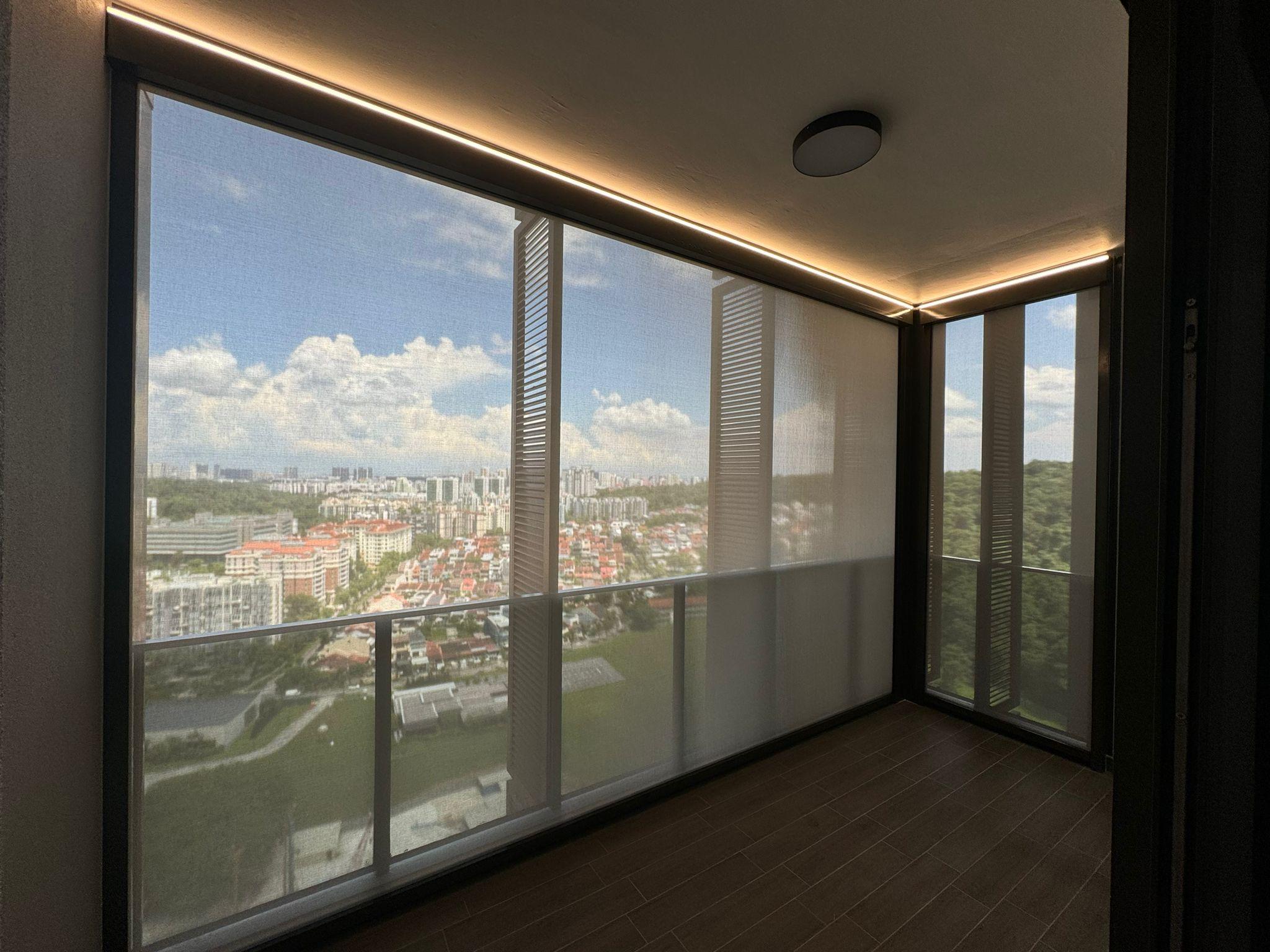
1% vs 3% vs 5% openness: the useful comparison
| Consideration | 1% openness | 3% openness | 5% openness |
|---|---|---|---|
| Screen density | Denser screen appearance. | Middle option. | More open screen appearance. |
| View and airflow feel | Retains a view but feels more filtered. | More visual openness in many settings. | Most open-feeling of these three choices. |
| Sun and daytime privacy priority | Often chosen when these are higher priorities. | A balanced alternative where more openness is preferred. | Useful where view and airflow feel are the main priorities. |
| Rain reduction | A denser fabric can help reduce direct rain penetration more than a more open screen, subject to site conditions. | More open construction may allow more rain through. | More open construction may allow more rain through. |
| Typical fit | Exposed or overlooked balconies; everyday multi-purpose use. | Balconies with some shelter where openness is valued. | Deeply sheltered areas where rain reduction is less important. |
These are decision cues, not test ratings. A 3% or 5% option can be the better choice for the right balcony: for example, when a deep roof provides shelter, when the view is the homeowner’s first priority, or when the MCST permits that fabric and colour. SmartZip should show actual samples and discuss the opening before recommending a configuration.
Rain, wind and the limits of a fabric choice
A common misunderstanding is that a denser fabric turns a balcony into a permanently enclosed room. It does not. When the blind is lowered, guided side tracks and a bottom bar help hold the fabric in position and can reduce gaps at the edges. This helps reduce direct rain and wind-driven spray compared with an open balcony. Yet side winds, large openings, high floors, bottom gaps, drainage, façade details and extreme weather all affect the outcome.
Choosing 1% may be sensible where customers want more rain reduction than a 3% or 5% screen can generally provide. But it should never replace a proper review of the balcony’s exposure and drainage. For a fuller explanation, see SmartZip’s balcony rain-protection guide.
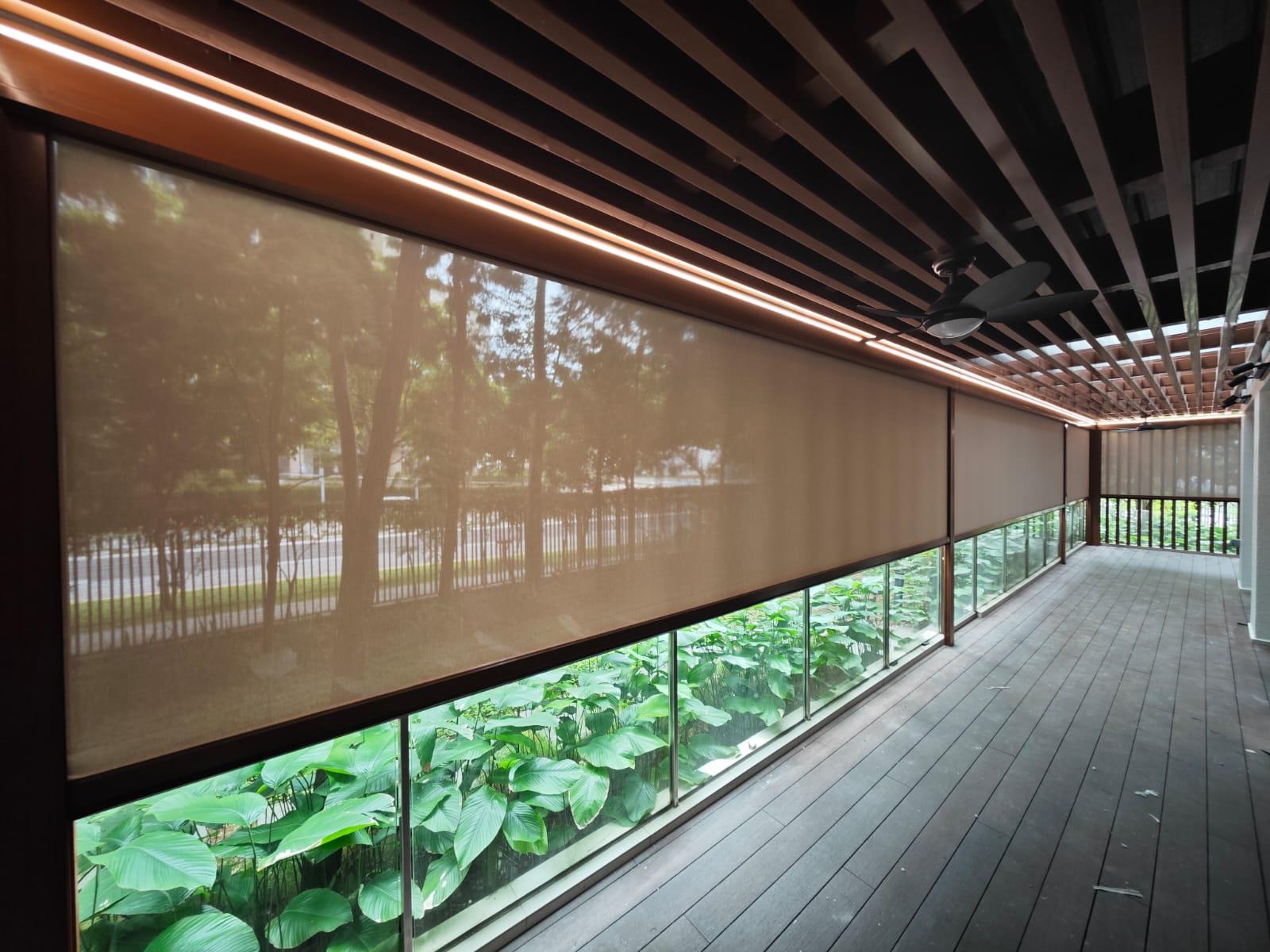
Why 0% fabric is not always available for condos
Some homeowners ask whether 0% is better because it is more opaque. In a private landed home, 0% may be an option depending on the project and the intended use. It can provide stronger visual blockage and privacy, but it also reduces the open-view character that many people want from a balcony. In SmartZip’s experience, most private-home customers still prefer 1% because it is a more flexible balance.
For condominiums, the decision may not be entirely personal. Many MCSTs limit the use of opaque fabrics because they consider the exterior appearance and visual uniformity of the development. Some properties also restrict fabric colours to an approved colour or a small approved range. Requirements differ by development and may change, so homeowners should check with their own MCST or managing agent before ordering.
SmartZip can assist by preparing product information, drawings, colour details and technical material needed for an application. The homeowner signs and submits the formal application. After submission, SmartZip can help answer installation questions or provide additional technical details, but the MCST or managing agent makes the final decision and approval cannot be guaranteed. Read the MCST approval guide for condo balcony blinds before applying.
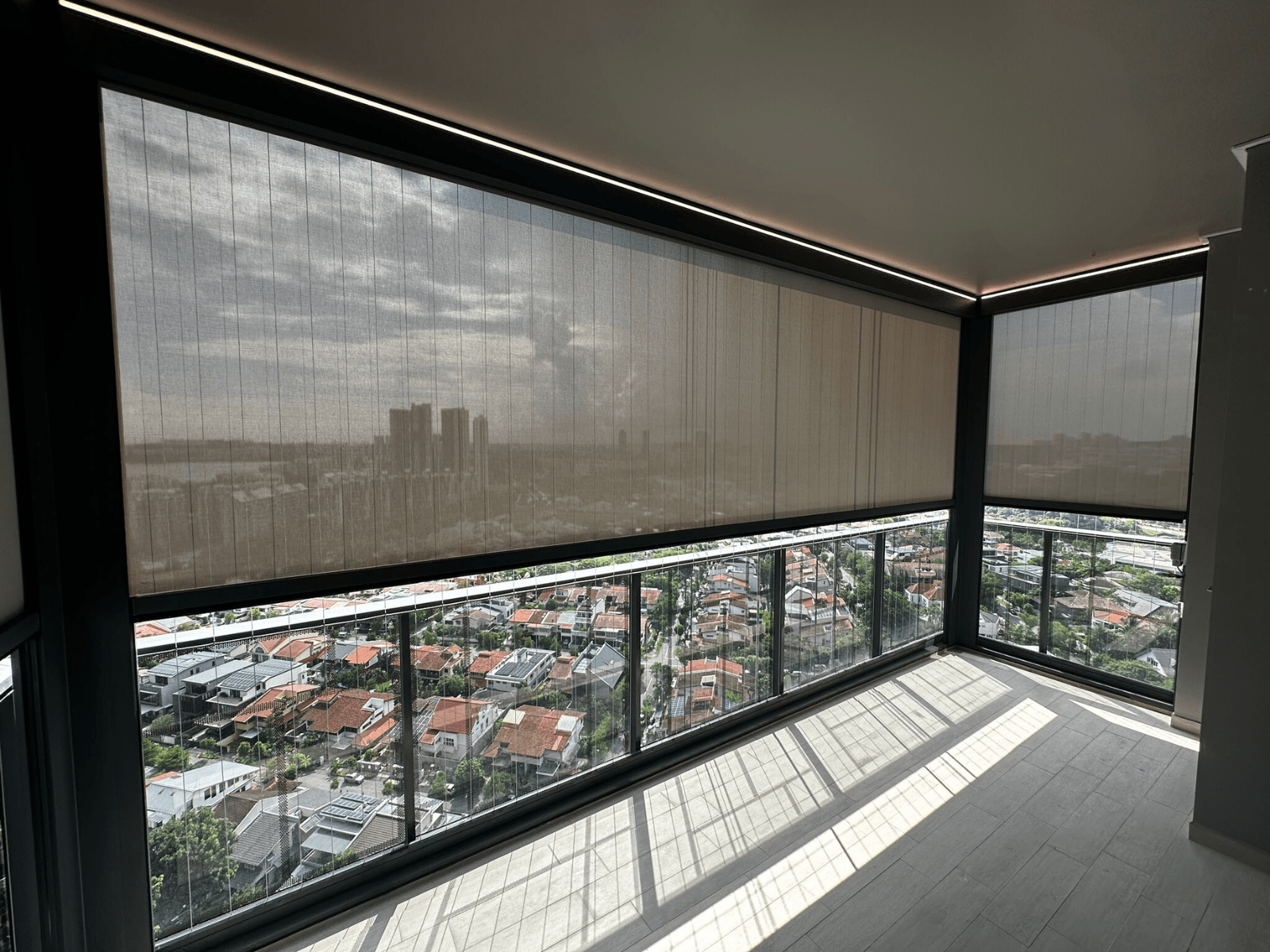
What to check before selecting a fabric
- Balcony orientation and sun: where glare and direct sun occur during the day.
- Exposure: whether rain normally arrives from the front, side or below in windy conditions.
- View and privacy: how close neighbouring blocks are and how much openness the household wants.
- Balcony structure: the available wall, ceiling, post and side-track fixing conditions.
- MCST requirements: permitted fabric types, colours, drawings, installation methods and application process.
- Daily use: whether the balcony is mainly for relaxing, dining, exercise, drying laundry or protecting furniture.
These checks also help determine the right SmartZip system. The SmartZip Flagship, Tiptronic and Megaview ECO pages explain different system options. Where insect control and ventilation are also key, consider the Dual Zipblind with Mesh.
Is 1% openness right for your balcony?
For many households, 1% is the most practical starting point when the aim is to improve daytime comfort and privacy while keeping a filtered view outdoors. It is especially worth considering on exposed, sunny or overlooked balconies. However, it should not be treated as the automatic answer for every home. A 3% or 5% fabric may suit a sheltered balcony or an owner who wants a more open feel, while a private-home project may warrant a 0% discussion.
The strongest choice is the one that fits the site, the household’s use and the property’s approval requirements. You can also review the broader Ziptrack fabric guide, condo balcony blinds installation guide and Ziptrack price guide.
Compare the right fabric for your own balcony
Send SmartZip a clear balcony photo, approximate opening dimensions and your property type. Our team can assess the exposure, installation conditions and suitable fabric options before you decide.
Book an appointment or contact SmartZip to start the discussion.
Frequently asked questions
Does 1% openness mean only 1% of light comes through?
No. Openness describes the open area in the fabric construction. It should not be used as a direct light-transmission promise because fabric colour, surroundings, sun angle and other conditions affect the result.
Does 1% fabric make a balcony fully rainproof?
No. A denser guided screen can help reduce exposure to wind-driven rain, but it is not a fully sealed or guaranteed waterproof enclosure. Conditions at the specific balcony matter.
Can a condo owner choose any fabric colour or 0% fabric?
Not necessarily. Many MCSTs have requirements on façade appearance, permitted fabrics and colours. Check with the managing agent or MCST for the specific development before ordering.
Why would anyone choose 3% or 5% fabric?
They can be suitable when preserving a more open view and airflow feel is the priority, or where a balcony is deeply sheltered and rain reduction is less important. The right choice depends on the site and approval conditions.