Open Daily (Including PH) 10am - 7pm
33 Ubi Ave 3, #01-30 Vertex, S408868

Can Ziptrack Blinds Keep Rain Out of a Balcony in Singapore?

A sudden Singapore downpour can send rain across a balcony within minutes. Outdoor furniture gets wet, the floor becomes slippery, and water may reach laundry, plants or the living-room threshold. This is why homeowners often ask: can Ziptrack blinds keep rain out of a balcony?
Quick answer: Ziptrack blinds can significantly reduce direct rain and wind-driven rain entering a balcony. However, they should not be described as a fully sealed wall, glass enclosure or 100% waterproof barrier. The result depends on the balcony structure, wind direction, rainfall intensity, installation details, drainage and fabric selection.
Do Ziptrack Blinds Really Keep Rain Out?
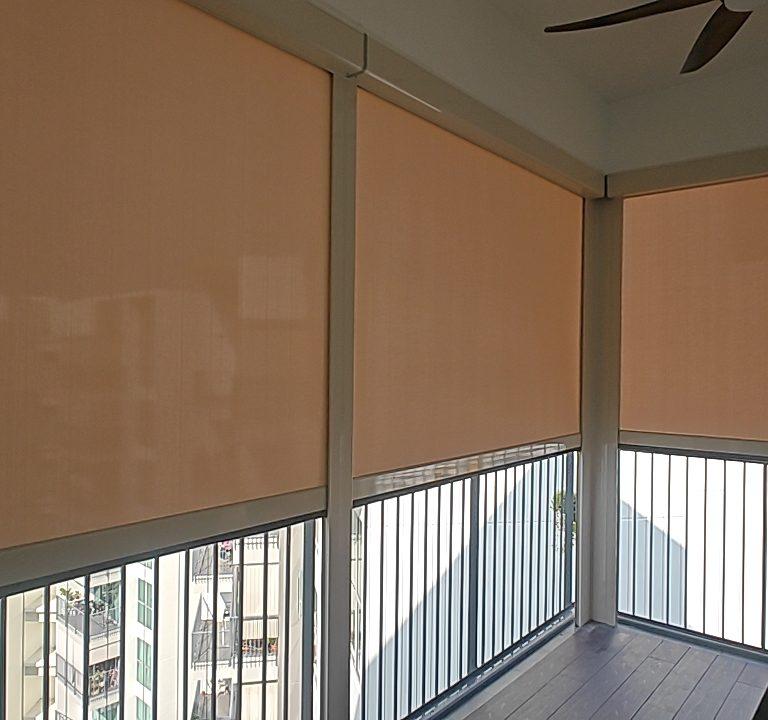
Ziptrack blinds form a vertical barrier across an open balcony. When the fabric is lowered and retained in its side tracks, it can intercept much of the rain approaching the opening and reduce the amount that reaches the usable balcony area.
Direct rain
A lowered blind can block a substantial portion of rain approaching the balcony opening from the front.
Wind-driven rain
Side tracks help keep the fabric aligned, but changing wind may still push water around edges, corners and structural gaps.
Residual water
Water can remain near the exterior edge or enter through the bottom and drainage zone, especially during intense weather.
The following photographs are from the same SmartZip project during rain. They are real, unedited site photographs rather than a laboratory test. They demonstrate the practical difference between an exposed opening and blinds lowered across that opening, while also showing why results should be assessed in context.
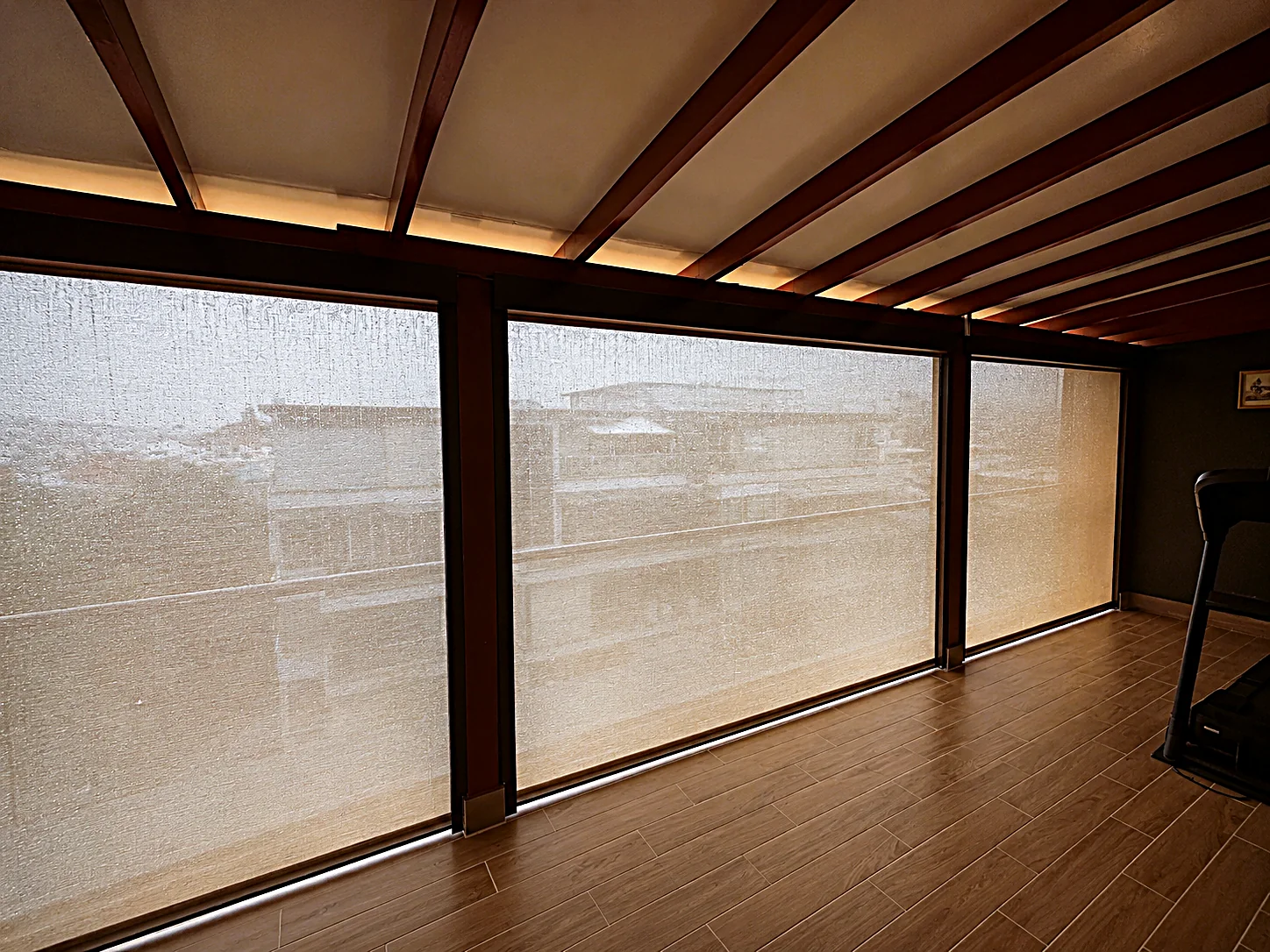
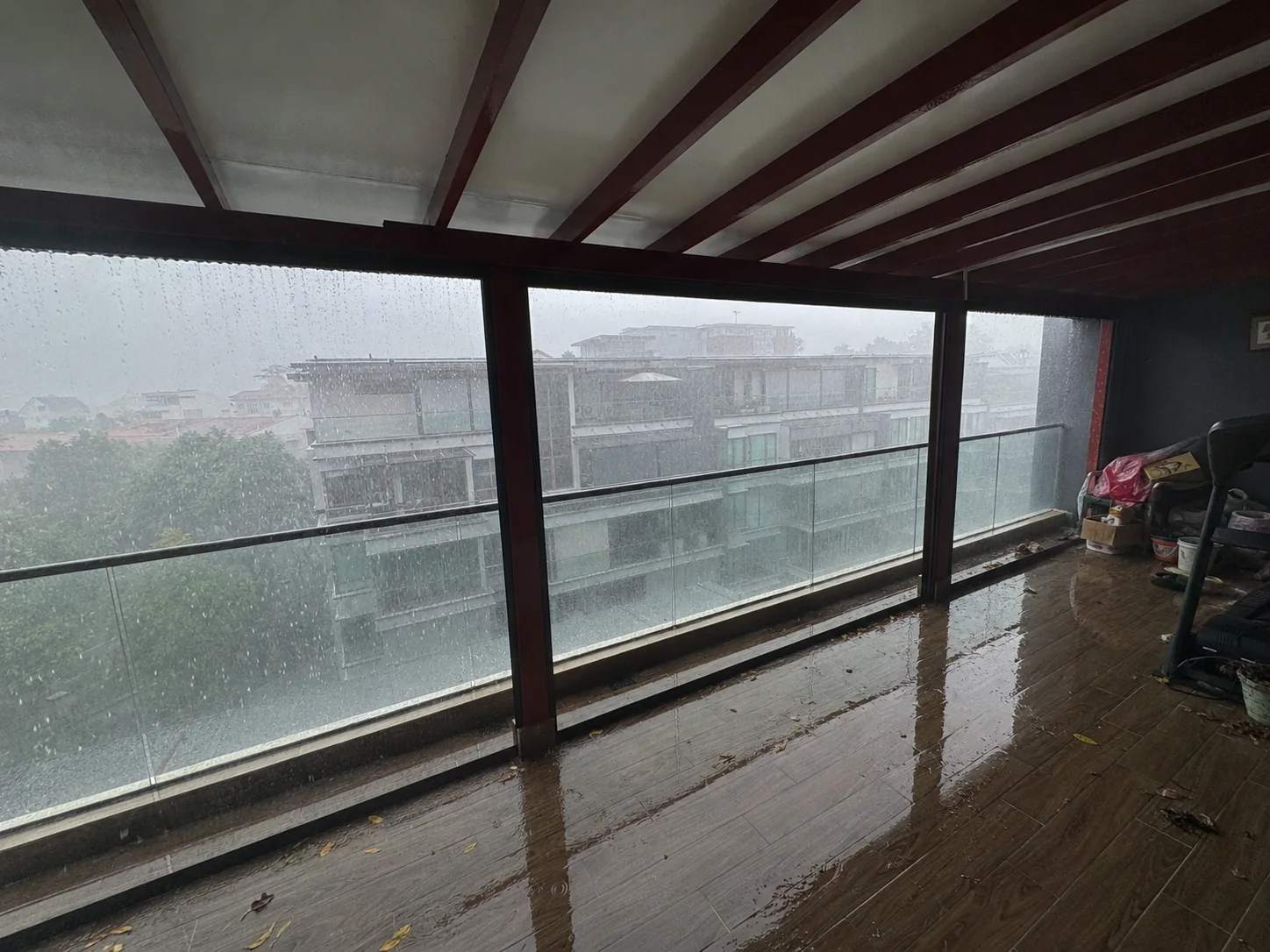
Evidence boundary: This real-project comparison shows the site conditions captured in these photographs. It does not establish a universal waterproof rating or guarantee that every balcony will achieve the same result.
Why Do Some Balconies Get Better Rain Protection?
No two balconies receive rain in exactly the same way. A deep, sheltered balcony with a ceiling and side walls is different from a shallow corner balcony exposed on two sides. Even within the same development, units on different stacks or floors may face different prevailing wind and rain patterns.
Opening direction
A balcony facing the main direction of an incoming storm may receive more wind-driven rain than a sheltered opening.
Roof or ceiling coverage
A deeper overhead slab reduces the amount of rain falling directly behind the blind line.
Open sides and corners
Rain can enter around a side return, column or corner even when the front opening is covered.
Floor height
Higher floors can experience faster and more variable wind around nearby buildings.
Opening dimensions
Very wide or tall openings need a suitable product configuration, panel layout and support structure.
Installation surfaces
Uneven walls, beams, railings and gaps can affect how closely the system follows the opening.
Bottom clearance
The bottom bar must finish appropriately for the site without obstructing necessary drainage.
Floor slope and drainage
Water already on the balcony must still flow towards a clear and correctly positioned drain.
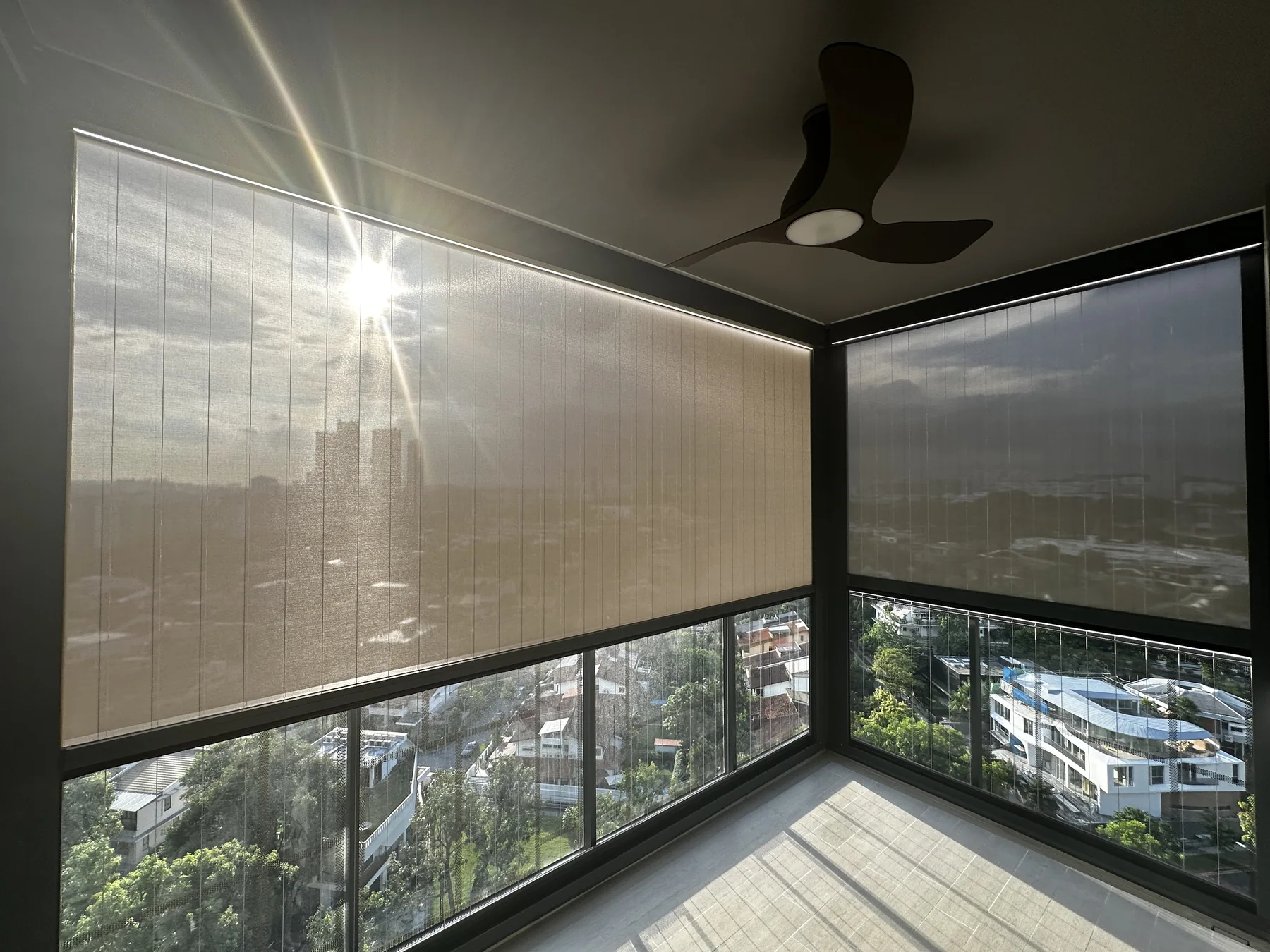
A site assessment should therefore consider the complete balcony rather than only its width and height. For a broader planning overview, read the Condo Balcony Blinds Installation Guide.
Direct Rain and Wind-Driven Rain Are Not the Same
Rain falling at a relatively consistent angle is usually easier to intercept. The blind sits across the opening and reduces the path available for droplets to travel into the balcony.
Wind-driven rain is more demanding. Gusts can change direction, push rain sideways and create pressure around columns, corners, neighbouring walls and the bottom of the opening. At higher levels, airflow around adjacent buildings may be especially complex. During severe thunderstorms, some water may reach the balcony even when the blinds are fully lowered.
| Condition | What the blind can do | What may still happen |
|---|---|---|
| Light, direct rain | Reduce rain passing through the main opening. | Small amounts of water may remain near the exterior edge or bottom. |
| Moderate wind-driven rain | Fabric retention and tracks help maintain a continuous barrier. | Water may be pushed around corners, gaps or an open side. |
| Heavy rain with strong gusts | Reduce exposure compared with a completely open balcony. | Some water entry remains possible; the system should not be treated as a sealed room. |
| Extreme weather | Performance depends heavily on site exposure and the installed configuration. | No promise should be made that the balcony or its contents will remain completely dry. |
Is Outdoor Blind Fabric Waterproof?
“Waterproof” is often used too broadly. Outdoor blind materials are selected for weather exposure, but their construction and openness vary. Some fabrics are dense and allow very little water to pass directly through the surface. Others are woven or perforated to preserve airflow and outward visibility.
A higher openness factor can provide better ventilation and a clearer view, but it also leaves more pathways for fine rain to pass through under pressure. A denser fabric generally offers stronger privacy, shading and rain reduction, although it may reduce airflow or visibility.
The right choice is a balance between:
- rain reduction and weather exposure;
- outward view and daylight;
- ventilation and heat release;
- daytime and night-time privacy;
- colour, façade requirements and maintenance.
See the Ziptrack Fabric Guide before selecting fabric based only on appearance.
Why Side Tracks and the Bottom Bar Matter
A guided-track system differs from a loose outdoor roller blind. The fabric edges are retained within the side-track system, helping the screen remain aligned across the opening rather than allowing the sides to lift freely.
The bottom bar adds weight and stability and provides a defined lower edge. Its finishing position affects the remaining gap, but the bottom area must also respect the balcony’s floor finish and drainage requirements. A smaller visible gap is not automatically better if it traps water or conflicts with an uneven floor.
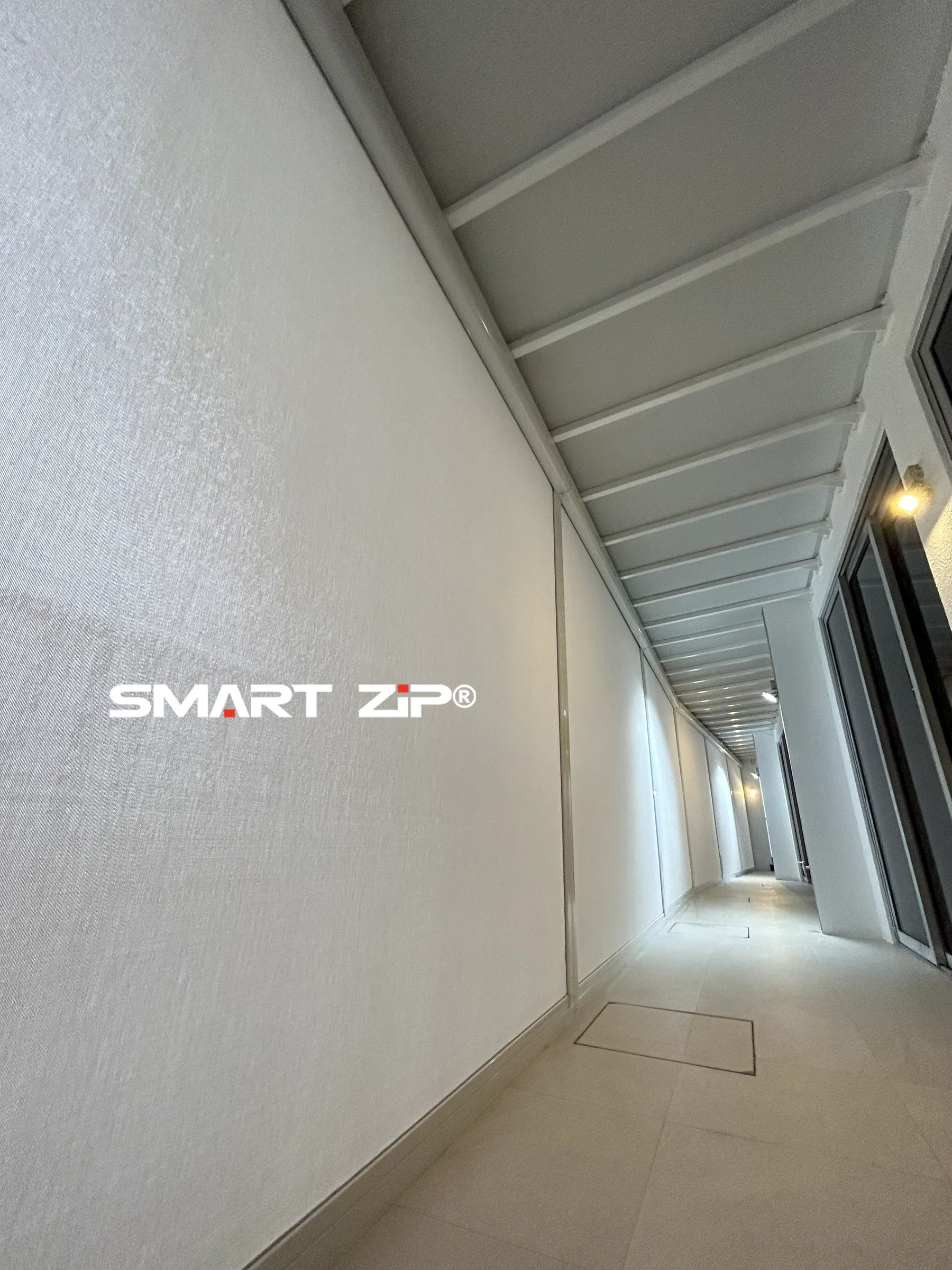
Good rain reduction depends on the complete installation: suitable panel sizes, correctly aligned tracks, stable supports, appropriate bottom finishing and sensible detailing around columns and corners. Site conditions may prevent a perfectly uniform seal, and a Ziptrack blind should still be treated as an outdoor movable system.
What Should Condo Owners Check?
Condominium balconies often have additional constraints. The MCST or management office may regulate frame colours, fabric colours, panel divisions, visible exterior components and installation methods. Drilling locations may also be affected by façade elements, ceiling finishes, railings or common-property boundaries.
Before installation, condo owners should confirm:
- whether written MCST or management approval is required;
- the approved frame and fabric colour;
- permitted fixing locations and panel divisions;
- the position of invisible grilles, ceiling lights and other fixtures;
- that drainage points remain clear;
- work permits, deposits, working hours and contractor access.
For the documents and submission process, refer to the MCST Approval Guide for Condo Balcony Blinds.
Should You Lower Ziptrack Blinds When It Rains?
When conditions are safe, lowering the blinds before the rain arrives can help reduce direct exposure. It is better to act before strong gusts place significant pressure on the fabric.
Do not repeatedly raise or lower the system while it is being pulled heavily by strong wind. If the blind is visibly under severe load, avoid forcing it and follow the operating advice provided for the installed product. Extreme weather should always be approached with caution; no movable outdoor blind replaces building-level storm protection.
What can a lowered blind help protect?
Reducing rain exposure can make a balcony more usable and can help limit weather reaching outdoor furniture, a laundry area, plants, flooring, a children’s play zone, a balcony workspace or a pet area.
These items should still be suitable for semi-outdoor use. Electronics, absorbent furnishings and valuables should not be left exposed on the assumption that the balcony will remain completely dry.
When May Rain Protection Be Limited?
Homeowners should expect more variable results in the following situations:
- the balcony is completely open on one or both sides;
- wind approaches from the side or is channelled around a corner;
- the opening is unusually wide or tall for the proposed configuration;
- the balcony has little or no overhead shelter;
- the floor slopes away from the drain or drainage is blocked;
- structural gaps remain beside tracks, columns or railings;
- rainfall and wind are unusually intense;
- the blind has not been lowered to its intended operating position;
- the installation surface cannot support the appropriate detailing.
In these cases, the correct recommendation may involve a different panel arrangement, a denser fabric, additional side detailing or a clear explanation that the achievable rain reduction is limited. Honest site assessment is more useful than an unrealistic waterproof promise.
What Should Be Checked Before Installation?
- Balcony orientation: Identify which openings receive the most direct rain.
- Main wind and rain direction: Use the owner’s actual observations during storms, not only a floor plan.
- Opening dimensions: Measure width, height, corners and side returns accurately.
- Floor level and exposure: Consider neighbouring buildings, open views and wind channels.
- Ceiling and wall structure: Confirm suitable mounting surfaces and existing finishes.
- Power location: For motorised systems, confirm supply, wiring route and switch or control requirements.
- Drainage position: Keep drains clear and consider floor slope and likely water paths.
- MCST requirements: Confirm colours, drawings, permits and work restrictions in writing.
- Primary purpose: Rank rain reduction, shade, privacy, airflow, view and insect control before choosing fabric and product.
Which SmartZip System Should You Consider?
The suitable system depends on opening size, controls, lighting preferences, fabric choice and site conditions. Product selection should follow measurement and an exposure assessment rather than a rain-protection claim alone.
For budget planning, read the Ziptrack Blinds Singapore Price Guide. Final pricing depends on measured dimensions, product configuration, fabric, controls and installation conditions.
Frequently Asked Questions
Are Ziptrack blinds completely waterproof?
No. They can significantly reduce rain exposure, but they are not a permanently sealed wall or window. Some water may still enter around edges, corners, structural gaps or the bottom.
Can rain pass through the fabric?
It depends on the material and openness. A dense fabric generally reduces water penetration more effectively than a highly open mesh, but wind pressure and rainfall intensity still matter.
Can wind-driven rain enter from the side?
Yes. Side tracks retain the fabric edge, but rain may still move around an open side, column, corner or building gap during crosswinds.
Should I lower the blinds before rain?
When conditions are safe, lowering them in advance can help. Avoid repeatedly operating a blind while it is visibly under strong wind load, and follow the instructions for your installed system.
Will outdoor furniture stay completely dry?
No complete-dryness guarantee should be made. The blinds can reduce exposure, but outdoor items should remain suitable for a semi-outdoor environment.
Do condo owners need MCST approval?
Requirements differ between developments. Ask the management office for the current rules, approved colours and application documents before installation.
Not Sure How Much Rain Protection Your Balcony Can Achieve?
Send SmartZip a clear photo of your balcony, opening dimensions and property type. Our team can assess the exposure, installation conditions and suitable blind configuration without making an unrealistic waterproof promise.
Product suitability and expected rain reduction remain subject to site inspection, measurement, fabric choice, installation conditions and weather exposure.